Nobody notices good microblading, and that’s exactly the problem. Most people only remember the brows they’ve seen that looked fake, which can make the entire technique seem unnatural. But the technique itself usually isn’t the issue. Fake-looking brows often come down to six specific decisions, five of which are made before the first stroke is even drawn. In this guide, we’ll break down those decisions and explain how to avoid them for more natural-looking results.
You Are Judging the Wrong Photos
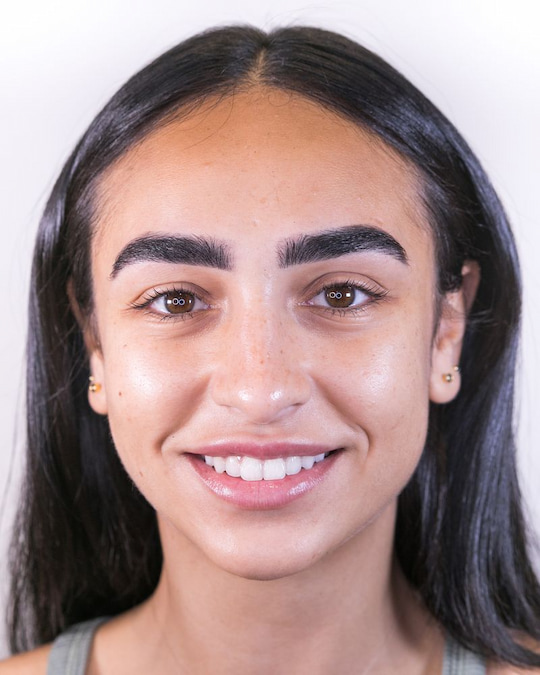
A lot of the “fake brow” photos you see online are taken on day one or day three. At this point, the pigment is still sitting close to the surface of the skin, the shape looks more defined than it will later, and the colour is at its darkest. In other words, you’re looking at the brows before they’ve had time to heal, not the final result. For more information about what’s normal during the early healing stage, read Why Do Brows Look Too Dark Right After Microblading? What’s Normal and When to Worry.
The real colour and softness start to become clearer around four to six weeks after the procedure. By three months, the brows have usually settled into a much more accurate version of what you can expect to live with. When choosing a technician, ask to see healed results taken at least four to six weeks after the treatment. Ideally, look for results at around twelve months too, and try to find examples on skin that is similar to yours.
The Six Things That Make Brows Read as Fake
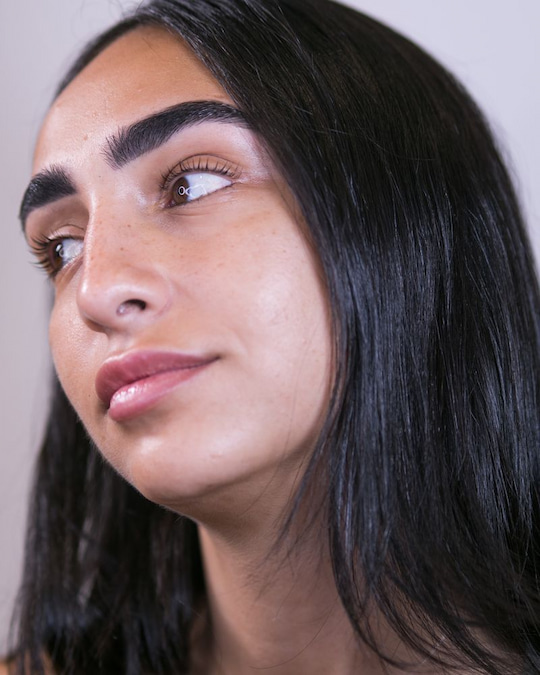
1. The Shape Was Chosen Before Your Face Was
One of the most common starting points for bad-looking brows is a shape that was decided before anyone considered your face. This could be a stencil, a technician’s “signature shape” used on every client, or even a saved photo of someone else’s brows.
Good brow mapping starts with your own features, including your brow bone, eye position, and natural hair growth. The shape also needs to look right when you’re sitting up, talking, and moving. A design that looks balanced while you’re fully reclined can look completely different once your face is upright and moving naturally. You can learn more about how different brow shapes suit different facial features in this guide to choosing the right eyebrow shape for your face.
Prevention: Your technician should map the shape directly onto your brows, take a photo, and show you the result in a mirror while you’re sitting upright. You should be happy with the shape before any pigment is opened.
2. Too Many Strokes, Packed Too Close
This is where individual “hair strokes” can start to look like a block of colour. When strokes are placed too close together, they can blur into each other as the brows heal. They may look crisp on day one, but by around six weeks, they can merge into a softer, more solid shape. That’s often when people feel their brows look “drawn on.”
Prevention: A skilled artist can always add more during the retouch, but there’s no easy way to remove pigment once it’s in the skin. Fewer strokes with enough space between them might look a little light at first, but they have a better chance of healing into natural-looking brows.
3. Every Stroke Going The Same Direction
Natural brow hairs don’t all grow in the same direction. At the front, they tend to grow upward and slightly outward. Around the arch, they change direction, while the hairs toward the tail usually lie flatter. They also overlap and cross naturally, creating the variation that makes real brows look, well, real.
When every stroke has the same angle, length, and spacing, the result can quickly look too uniform and artificial. It might look fine in a photo, but the pattern becomes much more obvious in person.
Prevention: Strokes should vary in length, thickness, and direction while following the natural growth pattern of your existing brow hairs. The goal is to work with your brows, not make every stroke look identical.
4. The Colour Is Not Your Colour
Choosing the wrong pigment can make even well-done brows look unnatural. If the colour is too cool or too dark for your skin, it can heal looking grey or ashy. If it’s too warm, it may take on an orange or reddish-brown tone.
The right reference isn’t the colour you normally use to fill in your brows. It should be based on your natural hair colour at the roots and your skin’s undertone.
Prevention: Ask your technician which undertone they’re choosing and why. It’s also worth asking to see healed results using a similar pigment on skin close to your own. Keep in mind that pigment naturally changes as it fades, so some colour shift over time is expected and doesn’t necessarily mean something went wrong.
5. The Front Is Too Strong
This is often the biggest giveaway. The front of the brow, closest to the nose, is naturally the softest and most sparse area. When it’s filled in too heavily or given a sharp, defined edge, it can make the brows look like makeup that never comes off. That’s often what people notice when they say brows look “done.”
Prevention: Keep the front soft, light, and less defined than the rest of the brow. The density should gradually build toward the arch and then taper naturally through the tail.
6. Symmetry Chased Too Hard
No face is perfectly symmetrical. One brow bone may sit slightly higher, one eye may be a little different from the other, and your natural brow shape will reflect those small differences. Trying to make both brows identical can actually make the final result look less natural.
Prevention: The goal should be balance, not perfect symmetry. Your brows should complement each other without looking like exact copies. Think of them as sisters, not twins.
For a deeper look at why perfectly symmetrical brows aren’t always the goal, read our guide on the eyebrow symmetry myth.
Natural Isn’t One Look – It Depends on What You Started With
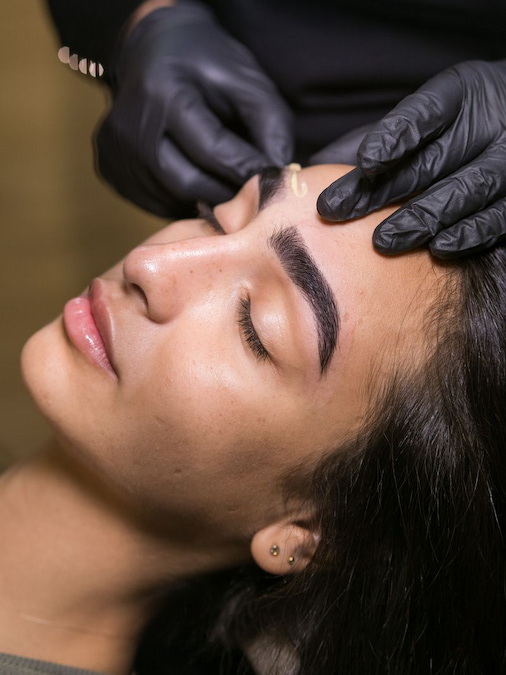
There’s no single definition of “natural” brows. The right approach depends on how much natural hair you already have and what you want to improve.
- Good density with a few gaps: You may only need a small infill of 5–8 strokes in one area rather than a full set. Infill Brow is designed for exactly this.
- Thin or over-plucked brows: This is one of the most common situations. If years of shaping have left your brows looking sparse, the “start lighter” rule becomes especially important.
- Very sparse or almost no hair: A full brow design may be needed. The technique matters more here, and powder or hybrid brows can often look more natural than using hair strokes alone on very sparse skin.
Which Technique Actually Reads Most Natural
Powder brows have a reputation for looking “made up.” On the right skin, they often hold a soft, believable shape longer than hair strokes, so the reputation is frequently backwards.
What a Good Consultation Sounds Like
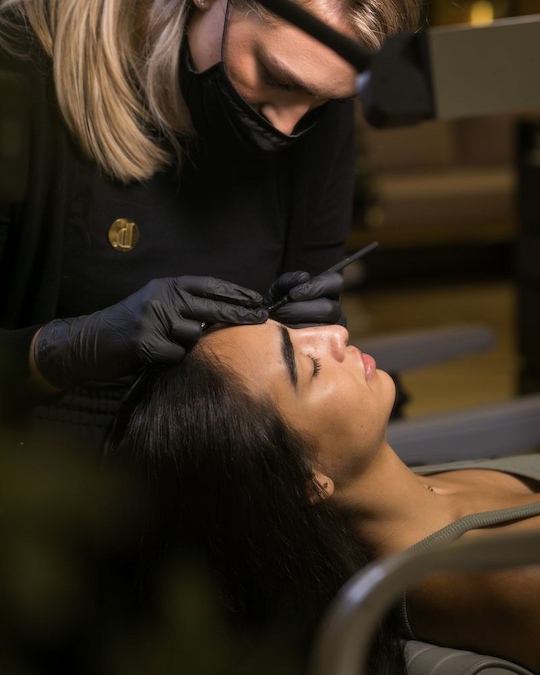
Ask these five questions:
- Can I see healed photos at twelve months, not day one, on skin like mine?
The single best filter. Most portfolios cannot pass it. - Will you map and photograph the shape before we start, and can I see it sitting up?
A good answer includes upright photos and your approval before pigment is opened. - What undertone are you using and why?
The answer should reference your hair roots and skin, not a generic “brown.” - What does the lighter version look like, can we do less and add at the retouch?
“Start lighter” is the correct default. - What is the plan if I hate it?
A clear answer that includes waiting, correction options, or removal pathways.
A consultation is not a sales appointment. A good artist will sometimes tell you not to book.
The Honest Limit
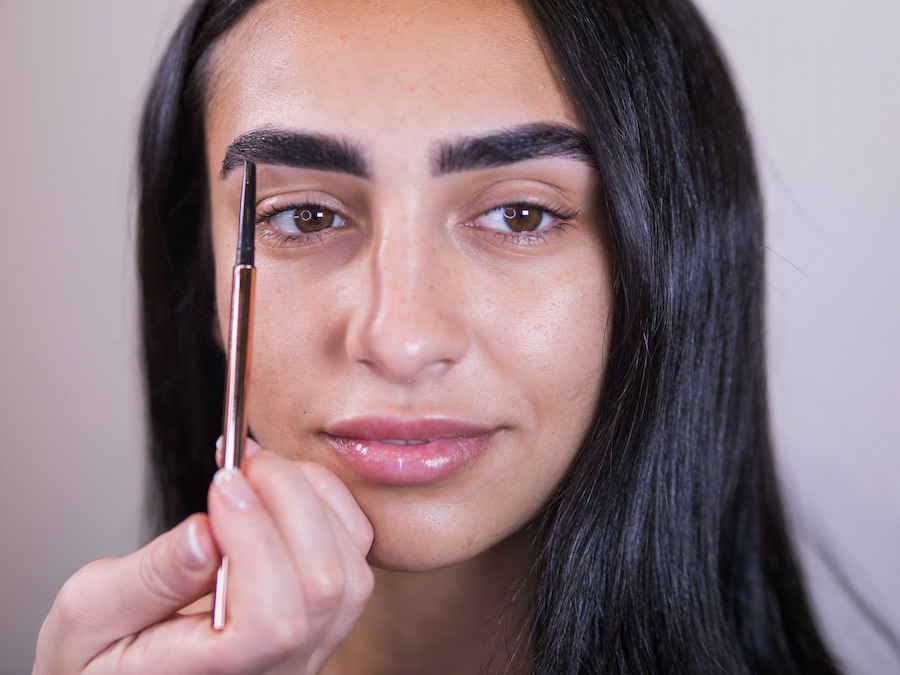
Pigment sits on skin. It has no height, no shine, and no direction of its own. At conversational distance, excellent microblading is invisible. At fifteen centimetres in hard light, it is identifiable by anyone looking for it. Anybody promising otherwise is selling.
The realistic goal is brows that nobody comments on, that you stop thinking about, and that look like they belong to your face. That is achievable. It’s not the same as undetectable.
If Yours Already Looks Fake
Three routes exist: wait and let it fade, correct and rebalance at a retouch, or remove. Each has its own process and timeline.
How to fix bad microblading · Microblading removal services
Frequently Asked Questions
Can microblading actually look natural?
Yes. You have almost certainly seen good work without registering it. The two variables that decide it are design and restraint.
Which brow technique looks the most natural?
It depends on the skin. Nano/Soft Brow often performs best on oily skin, classic microblading on normal-to-dry skin, and powder or hybrid on mature or very sparse brows.
Do microbladed brows stop looking natural over time?
Strokes soften at the edges before they lighten. A retouch restores definition rather than simply topping up colour.
Can I get microblading if I still have plenty of brow hair?
Yes. This is where an infill rather than a full set is usually the right call: a few strokes that fill gaps and blend into what is already there.
Book a Consultation
A consultation should feel like a conversation, not a commitment. It’s a chance to discuss your natural brows, what you want to change, and what will realistically suit your face, skin, and existing hair.
If you’re considering microblading and want to understand which approach is right for your brows, you can book a consultation with Brau. Studios are available in Dubai and Abu Dhabi.
Book a free consultation with us!