Eyebrows are often referred to as the “frame of the face,” and it’s so true. They play a pivotal role in defining facial features and expressions, enhancing our overall appearance.
But how many times have you caught yourself in the mirror or on a selfie, zooming in and wondering, “Why is one eyebrow higher than the other? Do I look angry? Tired? Off?” And then you start stressing that if you could just make them twins and have it fixed.
We’ve all done it. I’ve done it. But here’s the thing nobody says out loud: trying to make them perfectly identical is usually the mistake that makes everything look worse.
Your face isn’t supposed to be a geometry worksheet. Real beauty is balance and harmony, not mirror-image clones. Brows are sisters, not identical twins. When they work together with your eyes and the way your face moves, you look lifted and natural. Force them to match exactly, and they can end up looking stiff, fake, or weirdly disconnected, like someone drew them on with a ruler.
So let’s break this down properly: why brows are never the same, what “balanced” actually means (and why it’s so much better), and how to fix uneven eyebrows the smart way without losing yourself..
The Myth: "My Eyebrows Should Match Perfectly"
This whole idea came from everywhere at once: Instagram filters flipping your face so it lines up magically, those old super-skinny brow eras, face-tune apps that delete every tiny difference. We started thinking symmetry = pretty.
But when you force brows to be carbon copies, they often look “stamped on.” Flat. Robotic. Especially when you smile or talk, suddenly one side lifts more, and the whole thing feels off.
Many brow artists say it best: “Brows should match your eyes, not each other.” And that couldn’t be truer. If they’re too rigid, they highlight every other little asymmetry in your face instead of hiding it.
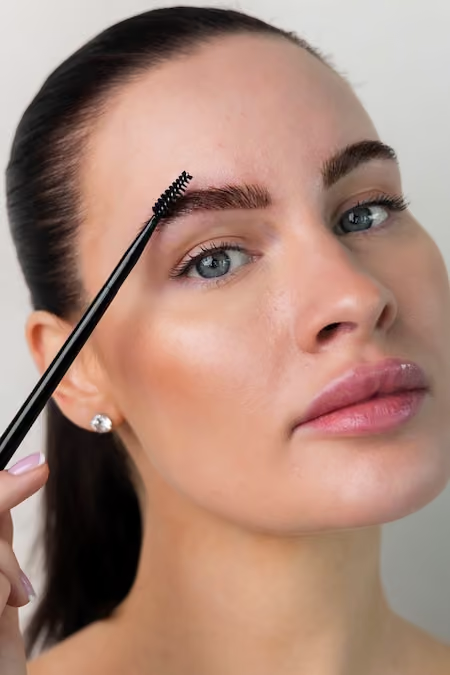
Most Faces Are Naturally Asymmetrical
Nobody’s face is perfectly symmetrical. One eye might be a tiny bit smaller or higher, one cheekbone a little more prominent, one side of the smile lifts more. This natural asymmetry is completely normal and comes from genetics, bone structure, muscle use, and daily habits.
The “mirror image” effect shows it clearly: If you mirror just one half of your face to make a “perfectly symmetrical” version, most people look strangely different, often unnatural. Your real face is the asymmetrical one you (and everyone else) are used to.
- Why This Matters for Brows
Brows follow the same rule. Your brow bones aren’t the same, hair grows a bit differently on each side, and habits create small differences. Forcing perfectly identical brows, same height, same arch, same thickness, onto a naturally uneven face usually makes the brows stand out more. They don’t blend; they highlight the face’s imbalances and can look “done” or artificial.
The better approach is balance, not perfect symmetry. Think “sisters, not twins.” Shape the brows so they feel related and harmonious while still suiting each side of your face. When they work with your natural features instead of fighting them, the result looks more effortless and flattering.
Why 100% Symmetry Can Look "Uncanny"
You know that feeling when someone’s makeup or filler is “too perfect”? It’s the uncanny valley thing. Perfect symmetry feels artificial because humans aren’t built that way. We have subtle quirks that make us look warm and real.
Super-matched brows can look great in a frozen photo, but the second you move, laugh, frown, or raise an eyebrow in surprise, they look stiff or overdone. A brow expert once told me flat-out: “We never chase 100% symmetry. It’s not natural, and it doesn’t look good in real life.”
The Art of Balance: Matching the Eyes, Not Each Other
This is where it gets interesting. Good brow artists don’t start with a ruler between the two brows. Instead, they focus on brow mapping and consider your unique features before touching the tweezers.
Here’s what they actually look at and adjust:
- Your overall bone structure and eye placement
- The natural arch and starting point of each brow
- How each brow sits relative to its own eye
- If one eye is slightly lower or higher, they adjust the brow’s arch, peak, or ending point so the face feels balanced
- Tail length and angle
- Thickness and density
- Color depth and visual weight
- Natural hair growth direction and pattern
The goal is harmony, not identical twins. They make small changes so the brows complement each eye and work together to balance the whole face, rather than forcing perfect symmetry that can actually highlight imbalances.
When to Correct and When to Embrace
Tiny differences? Leave them. They give your face personality. Think of all the gorgeous people with famously uneven brows who still look incredible; the asymmetry adds warmth.
But if one brow is way higher, super sparse from old over-plucking, or missing patches, yeah, that can throw everything off. You don’t need to make them twins, just bring them closer so your face feels balanced.
How Brau Approaches Bespoke Brow Shaping
At Brau, we hate generic stencils. Every person gets a real consultation: we look at your face, talk about what bothers you, and map everything out.
Then we use whatever fits best:
- Precise brow threading or shaping to gently move the arches into better alignment
- Brows lamination to fluff everything up and hide small differences
- Microblading or semi-permanent makeup to add strokes or density where it’s sparse, so both sides feel even
The goal is always brows that move with you, look effortless, and make you feel like the best version of yourself.
Ready to find your perfect balance? Book a consultation with Brau’s expert brow artists today and discover the shape that flatters you.

Last Thing
Eyebrows aren’t a math test. They’re supposed to frame your face, not solve an equation. Stop chasing perfect twins and start looking for harmony that feels like you.
Those little uneven bits? They’re part of what makes you look human and interesting. And if they’re bugging you enough to ruin selfies, a gentle professional tweak can change everything without erasing who you are.