Microneedling benefits are often sold as a fix for almost everything: pores, hair loss, melasma, deep wrinkles. In reality, the U.S. Food and Drug Administration (FDA) has cleared microneedling devices for only three uses in adults aged 22 and older. Everything else is either cosmetic or off-label. This guide ranks the real benefits by evidence, states the FDA clearances clearly, and lists five things the treatment will not reliably fix. It is written for anyone in Dubai or Abu Dhabi who has seen the treatment on social media and wants a straightforward answer before booking.
Medical note: This article is for information only and does not replace a consultation with a qualified practitioner. Individual results vary. Always disclose your full medical history before any treatment.
How Microneedling Works (The 60-Second Version)
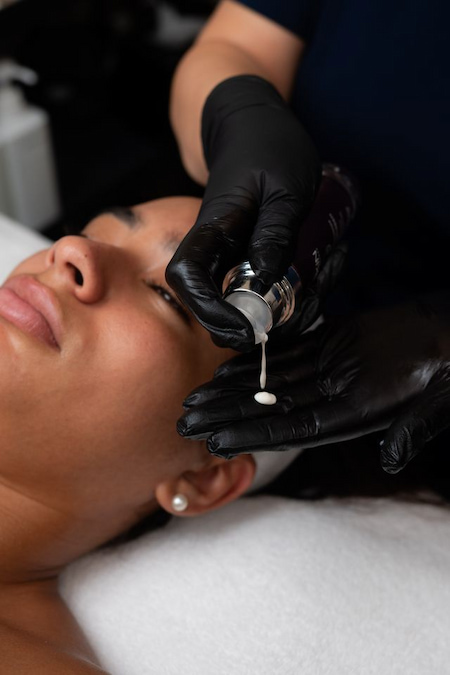
Microneedling creates controlled micro-channels in the skin using tiny, sterile needles. This triggers the skin’s natural healing response, stimulating new collagen and elastin, a process known as collagen induction therapy. Needle depth is carefully adjusted for the treatment area and your individual concerns, usually between 0.5 mm and 2.5 mm. Over the following weeks, the skin gradually repairs and renews itself. For a full walkthrough of the treatment, including preparation and aftercare, see our complete microneedling guide.
What Microneedling Is Actually Cleared To Treat
The FDA has cleared specific microneedling devices for three indications in patients aged 22 and older:
- Improvement in the appearance of facial acne scars
- Improvement in the appearance of facial wrinkles
- Improvement in the appearance of abdominal surgical scars
Any other claimed use is either cosmetic or off-label. That does not mean the treatment never helps other concerns; it simply means those uses have not gone through the same regulatory review for safety and effectiveness.
The 7 Microneedling Benefits, Ranked By Evidence
1. Acne Scarring – The Strongest Case
Multiple studies show measurable improvement in atrophic (indented) post-acne scarring. Texture and the appearance of scars typically begin to improve after two sessions, with clearer results by sessions four to six. Microneedling works by rebuilding the collagen network under the scar rather than simply resurfacing the surface. It is one of the most reliable non-laser options for this concern.
2. Fine Lines And Early Wrinkles
Microneedling softens fine lines and improves crepey texture by stimulating collagen deeper in the skin. It can visibly reduce crow’s feet, upper-lip lines and under-eye crinkling, helping the skin look smoother and firmer over time. However, it won't stop the muscle movements that cause expression lines or erase deep, established wrinkles. Think of it as a treatment that gradually refines and softens the skin, rather than a replacement for neuromodulators or dermal fillers.
3. Overall Skin Texture And Tone
This is the change most people notice first: a smoother surface, a more even tone, and less dullness. The early “glow” at 24–72 hours is largely temporary swelling. Real textural improvement builds from the third session onward as new collagen matures. Results are progressive and maintenance-dependent.
4. Enlarged Pores
Pores cannot be permanently closed or shrunk, their size is largely genetic and influenced by oil production. What microneedling can do is firm the collagen support around the pore opening so it appears tighter. Improvement is visible but requires ongoing sessions to maintain.
5. Stretch Marks
Older, white or silver stretch marks (striae alba) respond better than fresh red ones. Body areas usually need six or more sessions because the surface is larger and the skin is thicker. Common treatment zones include the abdomen, thighs and upper arms. Session time and cost scale with the size of the area.
6. Surgical And Injury Scars
The third FDA-cleared indication covers abdominal surgical scars. C-section scars, certain burn scars and mature injury scars can also improve, provided the scar is fully healed (typically at least six months post-surgery) and cleared by the treating doctor. Fresh or actively healing scars are not suitable.
7. Better Absorption Of Skincare Products
The micro-channels temporarily increase the penetration of topical products. This is both a benefit and a risk: the same channels will admit anything applied to the skin. That is why the post-treatment product list is deliberately short and why the FDA has not cleared any microneedling device for use with another product. Avoid DIY serums in the first 24 hours.
Why It Suits Deeper Skin Tones
Unlike ablative lasers, standard microneedling uses no heat or light energy. This lowers (but does not eliminate) the risk of post-inflammatory hyperpigmentation, an important advantage for Fitzpatrick skin types IV–VI, which are common across the UAE’s resident population. Depth control and strict aftercare still matter. PIH remains possible if the skin is over-treated or sun-exposed too soon.
5 Things Microneedling Won’t Fix
- Melasma: Evidence is mixed, and the treatment can sometimes trigger flares. A different, carefully supervised protocol is usually required.
- Deep static wrinkles and volume loss: These need neuromodulators, fillers, or energy-based lifting, not collagen stimulation alone.
- Hair loss: No microneedling device has FDA clearance for hair growth despite widespread claims.
- Sagging jowls or true skin laxity: This is the territory of radiofrequency, ultrasound or surgical lifting. Note that the FDA issued a safety communication in October 2025 regarding certain risks with radiofrequency (RF) microneedling devices; standard (non-RF) microneedling is a different modality.
- Permanent results: Collagen continues to turn over. Maintenance sessions are required to hold the improvement.
At-Home Derma Rollers Vs Professional Microneedling
The FDA has authorised no microneedling medical device for over-the-counter sale. Home rollers are not equivalent to a medical-grade treatment.
Who Shouldn’t Get Microneedling
- Active acne or isotretinoin (Accutane) within the last six months
- Active eczema or psoriasis in the treatment area
- Cold-sore outbreak
- Known tendency to form keloid scars
- Bleeding or clotting disorders, or current blood-thinning medication
- Recent radiation therapy
- Pregnancy (without obstetric clearance)
- Immunosuppression or poorly controlled diabetes
A proper consultation exists precisely to screen for these issues. Always discuss any medical condition with your doctor first.
What A Session At Brau Involves
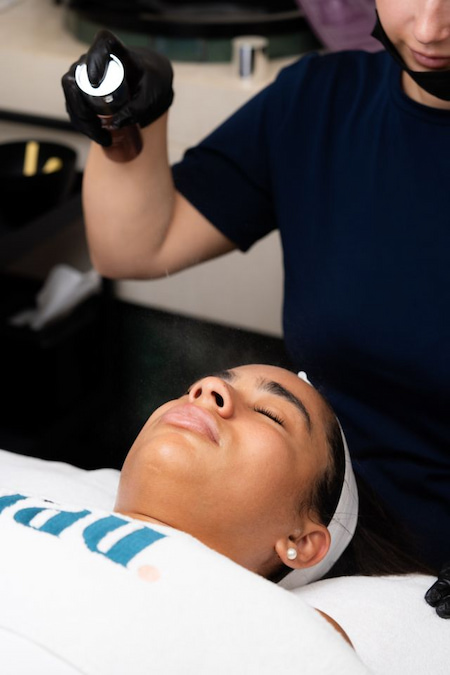
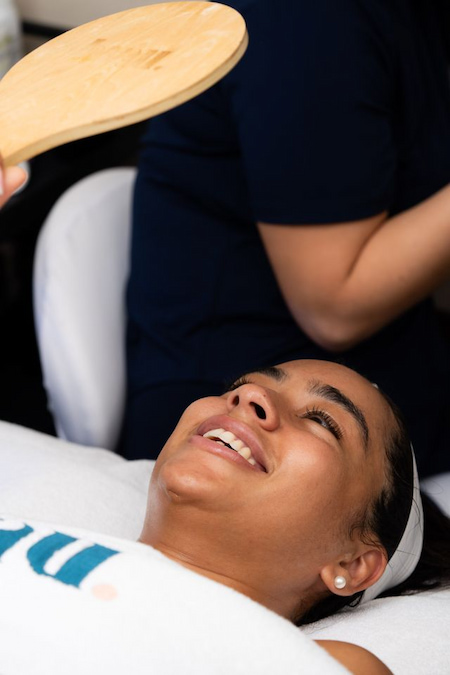
After a consultation and medical history review, topical anaesthetic is applied. The SkinPen (offered at Brau as Mesotherapy by SkinPen) is then passed over the treatment area. A cooling mask and appropriate serum follow. The full appointment usually takes under 60 minutes. Redness and tightness typically last up to five days. Many clients pair the treatment with a HydraFacial for combined benefits in texture and hydration.
Mesotherapy by SkinPen at Brau
FAQs
Is microneedling actually good for your skin?
Yes, for improving texture and the appearance of atrophic scarring when expectations are realistic. It is not a substitute for injectables and is not a reliable treatment for melasma.
How many microneedling sessions do I need?
A typical course is four to six sessions. Visible change often appears by the third treatment, with continued improvement as collagen matures.
How often should you get microneedling?
Sessions are usually spaced three to eight weeks apart depending on depth and how the skin responds, followed by maintenance as needed.
How long does microneedling take to heal?
Redness and tightness commonly last up to five days. Mild flaking is normal. Full collagen remodelling continues for several weeks afterward.
The Honest Verdict
Microneedling is one of the better-value options for refining texture and softening acne scarring, particularly on deeper skin tones, provided the concern is one the treatment can actually address, the depth is appropriate, and the session plan is realistic. It is not a universal fix. A consultation remains the most reliable way to match the treatment to your skin and goals.