Maybe the LED face mask is on your bedside table, or still in your basket, and you're wondering if it means you can skip the studio. The short answer: an at-home LED mask and a studio session share the same idea, but differ in strength and precision, so they do different jobs. Here's what each one does, and why they work best together.
At-Home LED Mask vs In-Studio LED at a Glance

Both options are built on the same principle, but they're not equal. A home mask gives gentle, regular top-ups, while a studio session gives stronger, tailored light on prepared skin. Here's how they compare:
New to LED therapy? Read our intro guide explaining LED light therapy.
What an At-Home LED Mask Does Well
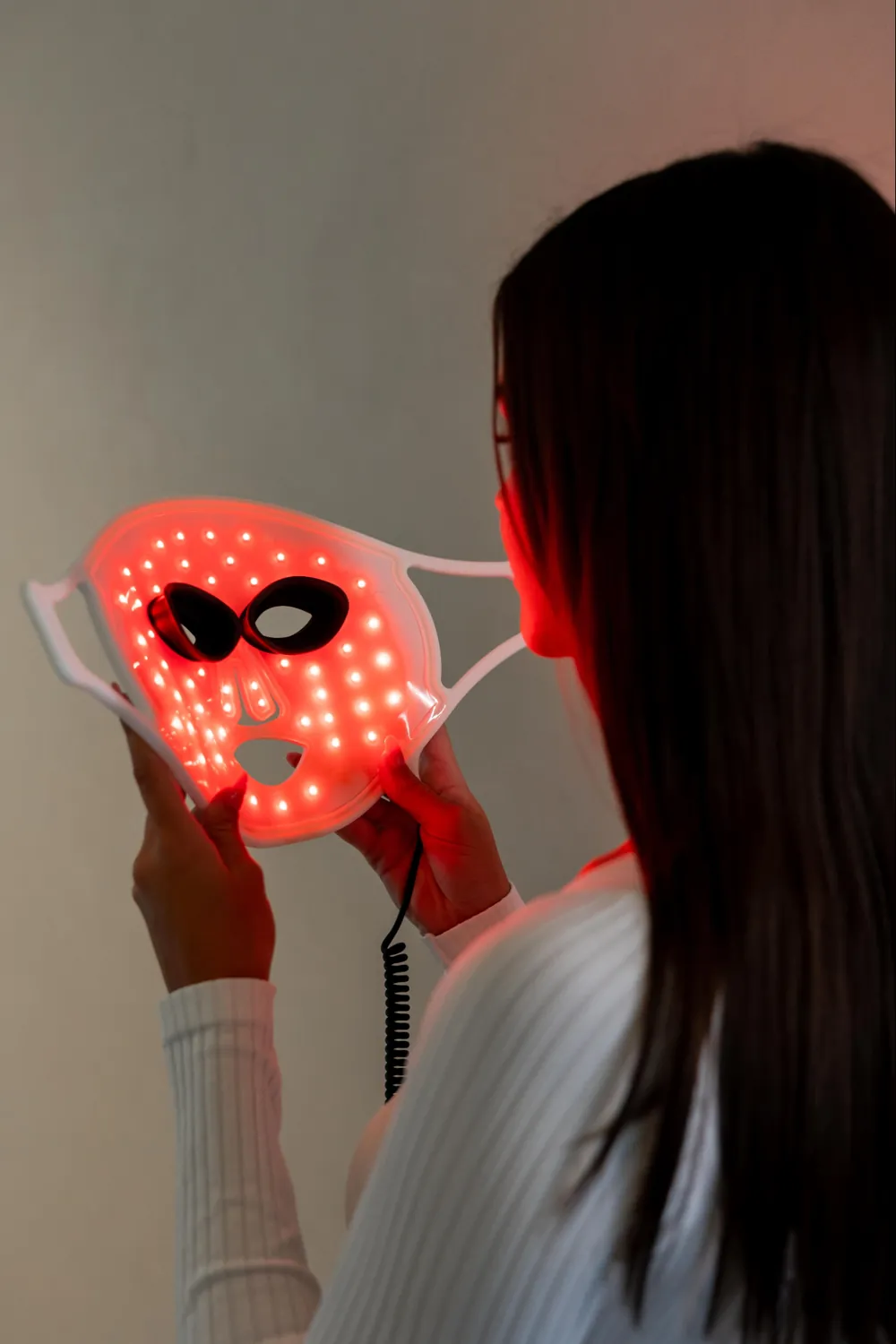
Consistency is a home mask's real strength, and with LED, regular use is what counts. So, do at-home LED masks work? For the right goals, yes. The key LED face mask benefits:
- Convenience. Use it on your sofa, on your schedule.
- A gentle glow. A good red light therapy mask helps skin look brighter and more rested.
- Steady skin between facials. It holds on to what studio sessions started.
Where a Home LED Mask Falls Short
A home mask is gentler, less precise, and only as good as your habit, which is why an LED light mask works slowly.
- Gentler by design. It's made for unsupervised use, so the light is softer.
- One programme for every face. The settings never change with your skin.
- Gaps in the fit. Mask fit and coverage vary: the sides of the nose, jawline and hairline get less light; the neck, none.
- Unprepped skin. Light lands on skin that hasn't been deep-cleansed or exfoliated.
- Quality and habit vary. Masks differ widely, and most people drop the routine within weeks.
What an In-Studio LED Session Adds
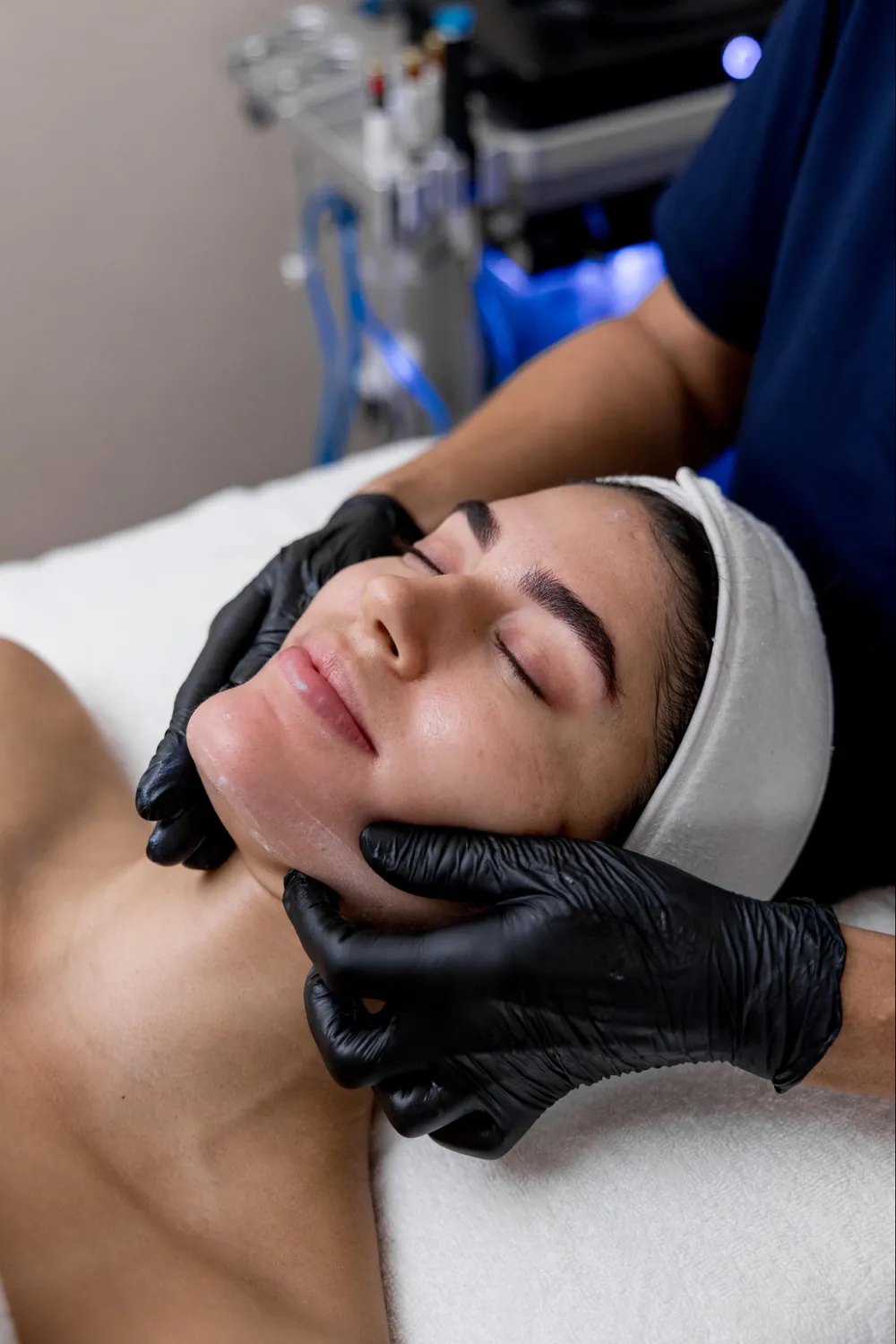
A studio session adds stronger light, even coverage and a therapist choosing the colour for your skin that day, something no professional-grade LED mask for home can match. Professional LED uses a panel close to the face, and your therapist picks:
- Red for skin that looks tired or less firm
- Blue for breakout-prone skin
- Yellow to calm the look of redness
Each session takes 15 minutes, with no downtime.
Why It Works Best as a Facial Add-On
Light reaches cleansed, exfoliated skin more evenly, so LED is the natural close to a facial:
- Event glow: after a Million Dollar Facial.
- A calm finish: after a Brau Signature Facial.
- Settling the skin: after SkinPen.
Results: What to Expect, and When
Both are gradual. The studio gets there in fewer sessions; a home mask needs months of regular use. The glow after one session is real, but temporary.
Which One Suits You?
It depends on your goal and timeline. On red light therapy at home vs professional sessions:
- Glow for an event in two weeks: the studio.
- Breakout-prone skin: a studio course, then a mask for upkeep.
- Skin that looks red after a treatment: studio LED, on the day.
- Keeping results between facials: your mask.
- You already own a mask: keep it, and add studio sessions around key dates.
- You tend to abandon routines: the studio.
Why the Best Routine Uses Both
A studio course builds the result; a home mask holds it. For a wedding, Eid or party season, start the course a few weeks ahead and book the last session close to the day. See our Eid beauty prep and pre-party treatments guides. Strong sun, air-conditioning, and long-haul flights often leave skin here dull or flushed.
How to Use an LED Face Mask at Home So It Earns Its Place
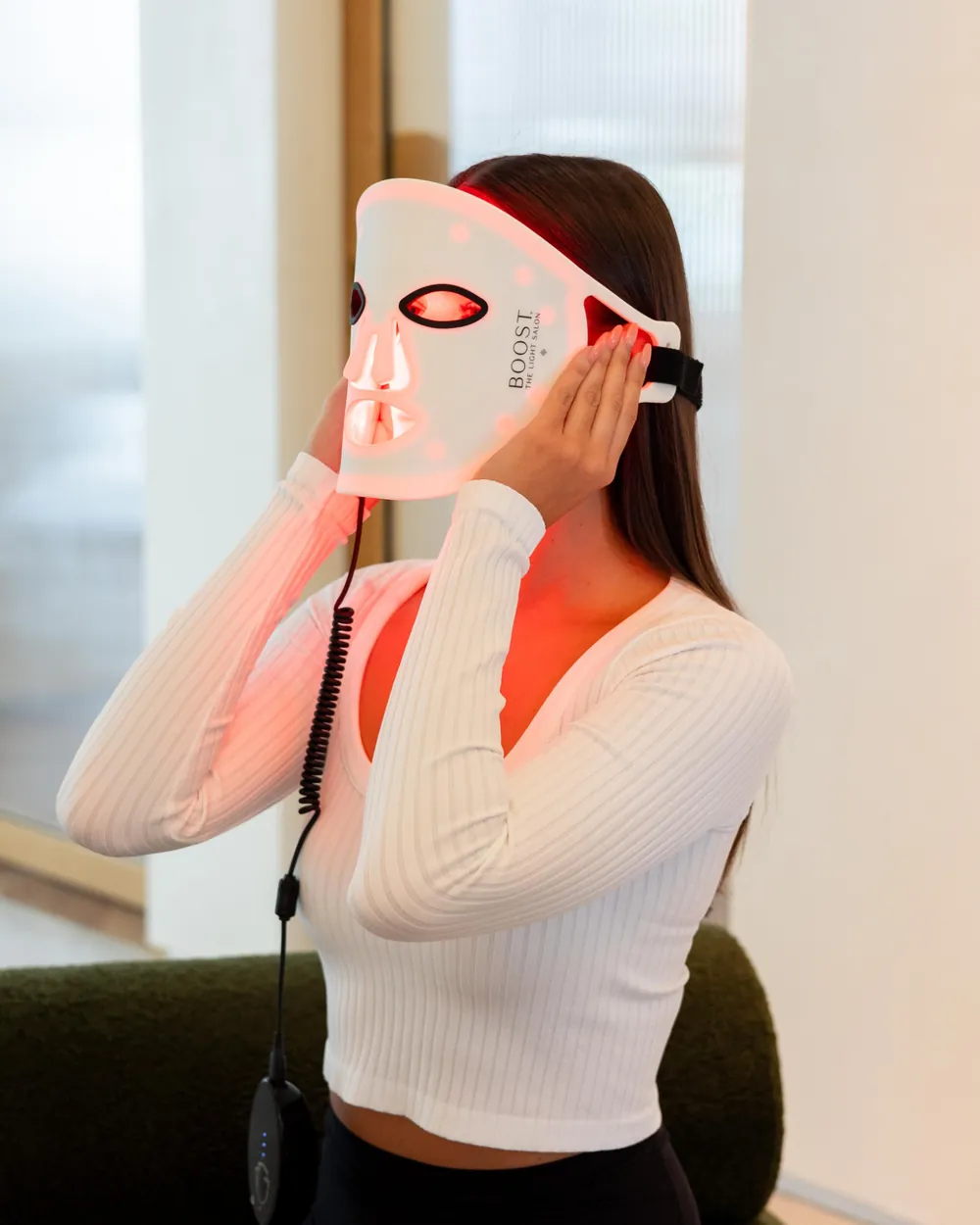
Here's how to use LED face mask sessions well. On when to use an LED face mask in routine: evenings, after cleansing.
- Start with clean, dry skin, with no makeup or SPF.
- Keep to the instructed session time. More isn't better.
- Protect your eyes as the maker advises.
- Pick fixed evenings, not "when I remember".
- Apply serum and moisturiser afterwards.
- Wipe your LED mask for face clean after each use.
What to Mention at Your Consultation
Let your therapist know about:
- Pregnancy
- Medication or skincare that makes skin light-sensitive
- Migraines or sensitivity to bright light
- Pigmentation that darkens with heat or light
- Any recent treatment
Check your mask's instructions for the same points.
FAQs
Do LED face masks really work?
Yes, for a gentle glow and gradual improvement with regular use over months. So, do LED face masks work like a studio session? Not quite: results are subtler and slower.
Are LED masks worth it?
Are LED masks worth it? Yes, if you'll use one several times a week for upkeep between facials. Less so as a studio replacement, or if you're unlikely to keep the habit.
Is in-studio LED stronger than a home mask?
Yes. Home masks are deliberately gentler because they're used unsupervised. In the studio, a professional panel and a therapist's choice of colour make each session do more.
How often should you use an LED mask at home?
Follow the maker's instructions, usually short sessions several times a week. Consistency matters far more than session length.
Can I use my LED mask after a facial or other studio treatment?
LED often follows studio treatments to help skin look calmer. Timing depends on the treatment, especially after exfoliation or SkinPen, so ask your therapist how long to wait.
Can you overdo LED at home?
Longer or more frequent sessions won't speed up results. Keep to the guide, and pause if your skin feels warm or irritated.
In-studio LED is available at Brau in Dubai and Abu Dhabi as a 15-minute addition to any facial, with no downtime. Book LED Light Therapy and finish your next facial with a glow.