Many clients at Brau come in after their first session feeling delighted and say, “My brows look amazing right now; do I really need to come back in six weeks?” They’re shining, scrolling through their after-photos, convinced they’ve just unlocked permanent perfection. The truth is, microblading isn’t a one-and-done appointment; it’s a conversation between your skin and the pigment. The first session is only the opening line, and the touch-up is where the real magic happens.
If you’ve ever googled “what happens if you don’t touch up microblading,” you’re not alone. Most of us fall in love with the fresh results and hope we can skip the follow-up, but here’s the reality: skipping that microblading touch-up usually means your brows won’t look as crisp, even, or long-lasting as they could. They won’t fall off your face or look terrible overnight, as nothing dramatic like that will happen; however, you will notice the difference in the mirror three, six, or twelve months later, and by then, it’s harder and sometimes more expensive to fix.
At Brau, we treat microblading as a two-part process because that’s what your skin demands. The first session lays the foundation, and the touch-up perfects and reinforces it. Today, we want to walk you through what changes when you skip it, who can sometimes get away with it, and what to do if you’ve already missed your scheduled appointment. Are you ready? Let’s go!
What a Touch-Up Actually Is (And Why It’s Scheduled Weeks Later)
A microblading touch-up is not the same as a yearly “refresh.” They’re two different appointments, even though clients often mix them up.
The touch-up (usually booked 4–12 weeks after your first session) is the completion of your initial treatment. Your skin has had time to heal, shed, and settle. Some pigments stay, some don’t. The artist goes back in with fresh strokes to fill gaps, deepen color where it faded, and improve the shape.
A refresh or annual upkeep, on the other hand, happens much later, usually 12–24 months, when the pigment has naturally faded from everyday life, sun, skincare, and time. That’s when we rebuild what’s been lost.
This timing isn’t random; it’s biology as your skin needs those weeks to reveal its true colors.
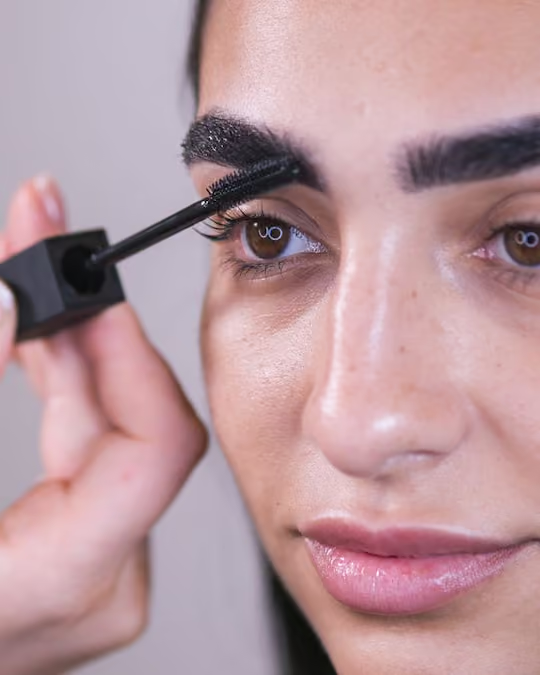
The Purpose of the First Microblading Touch-Up (4–12 Weeks Post-Procedure)
Why Microblading is a Two-Part Process
Your first microblading session is like a cautious first date. We place pigment carefully because your skin’s reaction is unpredictable. Some clients heal quickly and keep 80–90% of the pigment, while others (especially in our hot, sunny UAE climate) lose more. The body’s immune system identifies the pigment as a foreign invader and starts breaking it down almost immediately. Skin regeneration also plays a role as new cells push some pigment out as the epidermis turns over.
That’s why we never go full strength in session one. We’d rather underdo it and add more later than overdo it and end up with brows that are too dark or too thick once everything settles.
What the Artist Fixes During the First Touch-Up
When you come back for your microblading touch-up, the artist isn’t starting from zero; they’re sculpting. They’ll:
- Fill in patchy areas where pigment didn’t hold (common on oily skin or around the tails).
- Adjust warmth or coolness; sometimes pigment heals cooler than expected, so we warm it up.
- Add density and definition so the hair-like strokes look crisp instead of blurry.
- Fine-tune the shape now that swelling and redness are long gone.
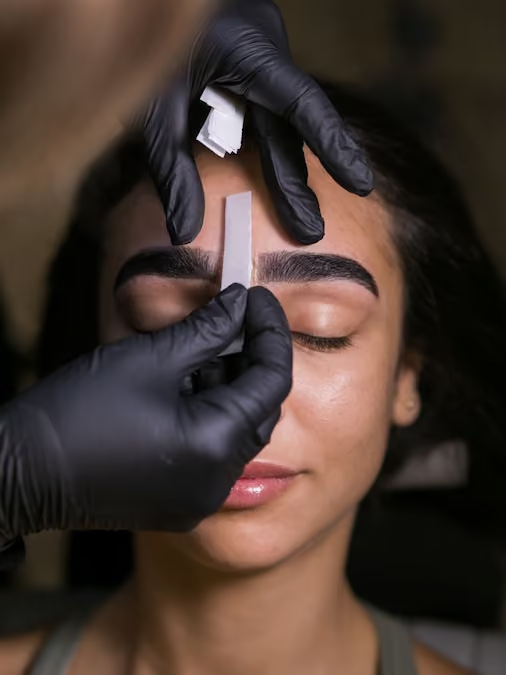
What Happens if You Skip the Immediate (6-Week) Touch-Up?
This is the question everyone asks, and here’s what you need to know.
Uneven Pigment Retention
Without the second session, some strokes hold beautifully while others ghost away. You end up with patchy brows; one side might look full, the other sparse.
Premature Fading
One layer of pigment simply doesn’t stand a chance against your immune system for long. Most clients who skip their touch-up notice significant fading by month 4–6 instead of 12–18.
Lack of Detail and Definition
The gorgeous, hair-like strokes soften faster without reinforcement. What started as crisp and natural can look a little fuzzy or faded by the time summer rolls around in Dubai.
The Long-Term Effects of Skipping Touch-Ups (Months to Years)
Faster Fading and Shorter “Best-Brow” Window
Without the touch-up reinforcement, many clients tell us their brows looked “pretty good” for maybe six months, then disappeared faster than they expected.
Uneven Fade Pattern: Why Brows Don’t Fade Symmetrically
Your left and right brows aren’t twins. One side might get more sun in the car, you sleep more on one cheek, or one area has slightly oilier skin. Skipping the touch-up makes these natural differences more obvious over time.
Color Shifts: Why Tone Can Change Over Time
As pigment fades, it can shift from warm brown to cooler grayish tones (especially with sun exposure or certain skincare acids). It’s not that the pigment “turns blue”; it’s that the warmer molecules break down first. That’s why a well-timed touch-up prevents this awkward phase.
Stroke Softness/Blur Over Time (And What You Can and Can’t Fix Later)
The beautiful feathery strokes lose their edge. A touch-up can sharpen them if done in the first few months. If you wait too long, the artist might have to treat it more like a full refresh because there’s less pigment left to build on.
Who Can Sometimes Skip the Touch-Up (And Still Be Happy)?
Yes, that can happen.
The “Rare But Real” Scenarios
Some clients with dry-to-normal skin, excellent aftercare, and minimal sun exposure heal so evenly that the first session is considered enough. They want a very soft, powdery look and are happy when it gently fades. We’ve had a handful of these unicorns at Brau over the years.
The Trade-Off
That soft look usually means you’ll be back for a full refresh sooner, maybe 10–12 months instead of 18–24. It’s a personal choice, and we support it when the skin and goals line up.
Who Usually Should NOT Skip It (High Fade/Patch Risk)
Skin + Lifestyle Factors That Reduce Retention
Oily skin, active lifestyles with lots of sweating, beach days, pool time, or using retinoids and strong exfoliants; all of these make pigment retention harder. Our intense sun here accelerates fading like nothing else. If any of that sounds like you, skipping the microblading touch-up is usually a decision you’ll regret around month five.
Brow Goals That Almost Always Need a Touch-up
If you want defined shape, fuller-looking brows, stronger tails, or you’re correcting over-plucked or sparse areas, one session rarely cuts it. The touch-up is what gives you that “wow, did you get your brows done?” reaction from friends.
“I Missed My Touch-Up Window.” What Should I Do Now?
Don’t panic; we’ve got you.
- If it’s been 8–12 weeks: Come in anyway. We can still do a standard touch-up in most cases. The sooner, the better.
- If it’s been 3–6 months: We’ll treat it more like a gentle refresh. Expect a slightly longer appointment and a small price adjustment, but the results are still beautiful.
- If it’s been 12+ months: We’ll assess what’s left and design a plan; sometimes a light refresh, sometimes a full new session, depending on how much pigment remains.
The door is never fully closed. Just book a consultation, and we’ll tell you honestly what your brows need.
FAQs
Does microblading look better after a touch-up?
Yes, almost always. The difference is night and day. The first session gives you 60–70% of the final look. The touch-up delivers the remaining 30–40% that makes everything look polished.
What happens if you stop microblading?
Nothing bad. Your brows simply fade back to their natural state over 12–24 months (sometimes faster if you skipped the touch-up).
Does microblading touch-up fade?
Of course it does; that’s how semi-permanent makeup works. But because it’s layered on already healed skin, it tends to last longer and fade more evenly than the first session.
Do you always need a touch-up after microblading?
Not always, but 9 out of 10 clients are happier when they do one. It’s the difference between “pretty good” brows and “I wake up like this” brows.
When to do microblading retouch?
The first touch-up is 4–12 weeks after the first session. After that, most clients return every 12–24 months for maintenance, depending on skin type and lifestyle.
Ready for Brows That Actually Last?
Skipping your microblading touch-up isn’t the end of the world. Your brows won’t look ruined. But they probably won’t look as flawless for as long as they could. The first session plants the seeds. The touch-up helps them bloom.
At Brau, we want you to fall in love with your brows every single day, not just the first two weeks. Whether you’re ready for your perfection session or just want an honest assessment of where you’re at now, we’re here.
Book your microblading touch-up session (or a free consultation if you’ve been putting it off) and let’s give your brows the ending they deserve.