For decades, many women covered their beauty marks. Today, more people are choosing to add one on purpose. A carefully placed semi-permanent beauty spot (also called a beauty mark) has become one of the most subtle and effective ways to draw attention to a favourite feature without looking made-up. This guide covers placement, pigment choices for deeper skin tones, the real healing timeline, and what to expect in the UAE climate so you can decide whether it is right for you.
What a Semi-Permanent Beauty Spot Actually Is

A semi-permanent beauty spot is created through micropigmentation. A single-use, ultra-fine needle deposits cosmetic pigment into the skin's upper layer. Because the deposit is shallower than a traditional tattoo, the skin’s natural renewal cycle gradually fades the colour over time. That's why the results gradually fade instead of lasting forever. The pigments themselves are also formulated differently from those in body-tattoo inks, resulting in a softer, more natural finish.
Why Beauty Marks Are Back
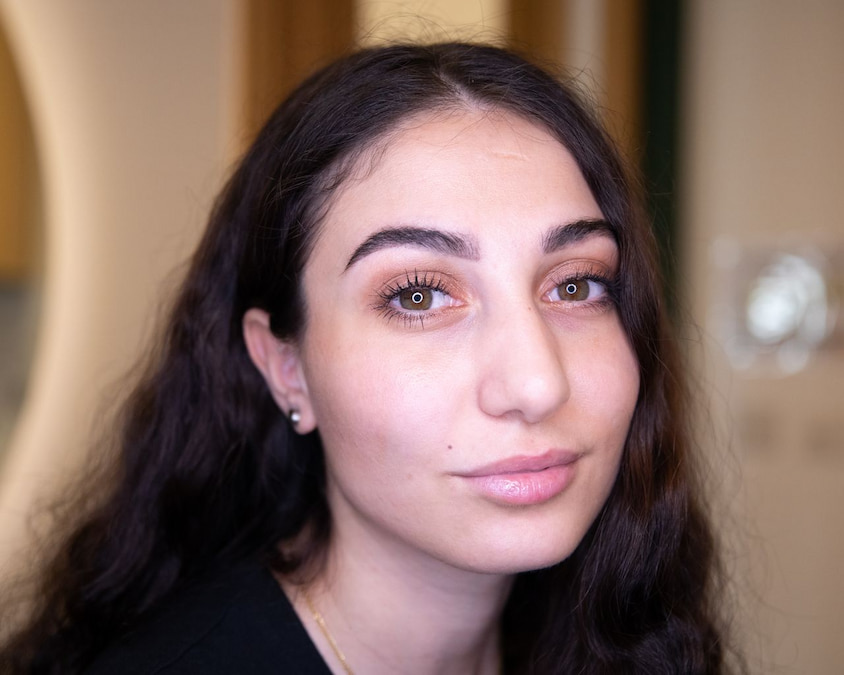
Beauty marks have gone in and out of fashion for centuries. In the eighteenth century, women wore velvet or silk patches to highlight features and hide small scars. In the twentieth century, Marilyn Monroe’s mark above the lip became iconic, later joined by Cindy Crawford’s and Angelina Jolie’s. The current wave is quieter: a single, precisely placed spot that looks as if it has always been there. The appeal is simple: it enhances your features without looking obvious or relying on makeup.
Where to Put It: A Placement Map
Test it for two weeks first. Draw the mark daily with a fine brown eye pencil, or try a temporary henna or self-tanner version. See how it looks in different lighting and with different hairstyles before making it permanent.
How the Treatment Works, Start to Finish
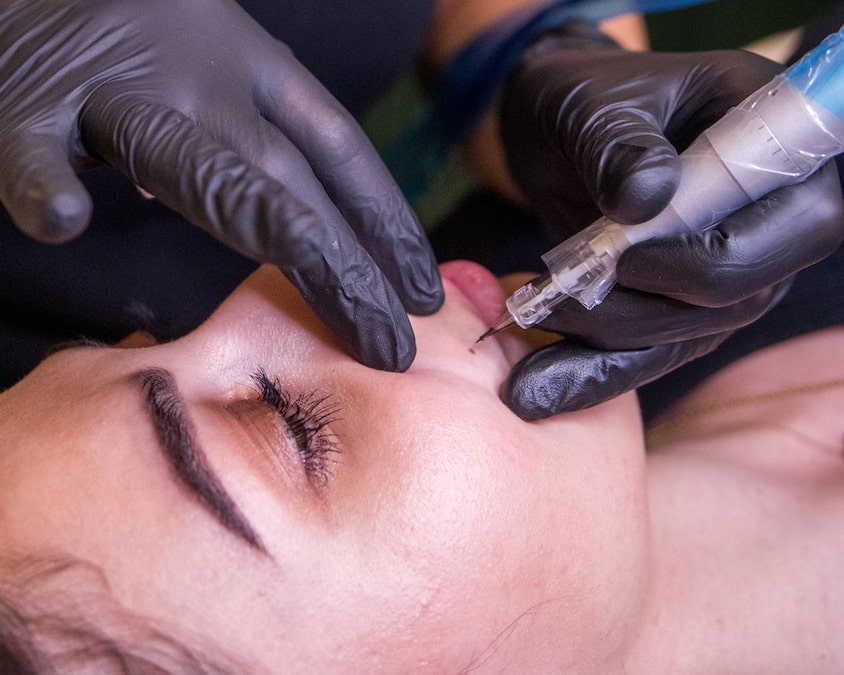
- Consultation and face mapping: Together with your artist, you decide the exact size, shape, and position that feels right for you.
- Your artist custom-blends the pigment to match your skin tone and undertone.
- Once the numbing cream takes effect, the application takes about 15–30 minutes.
- You book a touch-up 4–6 weeks later, once the colour has settled.
Two weeks before:
- Pause retinoids, AHAs, BHAs and strong exfoliants for at least three days.
- Avoid chemical peels, laser treatments or fillers for 2–4 weeks prior.
- Arrive with a clean, makeup-free face.
- Disclose any medications or blood thinners.
Pigment on Deeper Skin Tones: What Nobody Tells You
On Fitzpatrick III–VI skin, a beauty mark has to read as darker than the surrounding tone while still looking plausible. Getting that balance right is a little trickier than it is on lighter skin tones.
Brown-based pigments are preferred over pure black because black can shift grey or blue-green as it fades. Undertone matching (warm, cool or neutral) matters more than simply going darker. Deeper skin is also more prone to post-inflammatory hyperpigmentation if the artist works too aggressively, so a light hand and proper aftercare are essential.
Does It Hurt?
Most clients describe a light scratching sensation. Topical numbing cream is applied first, and the session is short, so discomfort stays brief. The lip border and under-eye area are slightly more sensitive than the cheek.
Healing Timeline: Day 1 to Week 6
- Days 1–2: The mark looks darker and slightly larger than the final result; mild redness is normal.
- Days 3–7: A small scab forms. Do not pick it.
- Days 8–14: The scab sheds, and the colour can look 30–60% lighter. This is when many people worry that the pigment has faded too much, but it's completely normal.
- Weeks 4–6: The true colour settles. This is when the touch-up is assessed, and any refinement is made.
How Long It Really Lasts – and Why Every Clinic Gives a Different Number
Most beauty spots last around 1–2 years, although many people choose an annual colour refresh. Several factors change the timeline:
- Oilier skin sheds pigment faster.
- High-movement zones (lip, under-eye) fade sooner.
- UV exposure is the single biggest accelerator.
- Regular use of retinoids or acids speeds fading.
- Exfoliating facials and strong chemical peels also reduce longevity.
In the UAE, year-round high UV means most clients should plan for the shorter end of the range. Daily broad-spectrum SPF is the most effective way to protect the result.
Beauty Spot vs Cosmetic Freckles vs a Real Mole
When You Should Not Get One
Never place cosmetic pigment over or immediately beside a raised or existing mole. Pigment can obscure the colour, border or size changes that clinicians look for during skin checks. If you have any moles you are watching, keep the beauty spot well clear of them.
What It Costs in the UAE
Expect a range of roughly AED 300–800 for a single beauty spot, depending on the clinic, the artist’s experience and whether a touch-up is included. Factors that influence price include pigment customisation, location complexity and the follow-up appointment.
Aftercare for the UAE Climate
Do:
- Keep the area dry and clean for the first 24 hours.
- Apply broad-spectrum SPF daily once healed.
- Use only gentle, fragrance-free cleansing.
- Book the 4–6 week touch-up.
Don’t:
- Apply makeup to the area for 10 days.
- Swim in pools, the sea, or use saunas, steam rooms, or hammams for 10 days.
- Pick at any scab.
- Use retinoids or acids on the area for a week.
- Expose the mark to direct strong sun for the first 7 days.
Between beach days, swimming pools, gym sessions, and the UAE's heat and humidity, it can be harder to protect a healing beauty spot. Being extra careful during those first two weeks helps the pigment settle evenly.
Book Your Semi-Permanent Beauty Spot Session with Brau
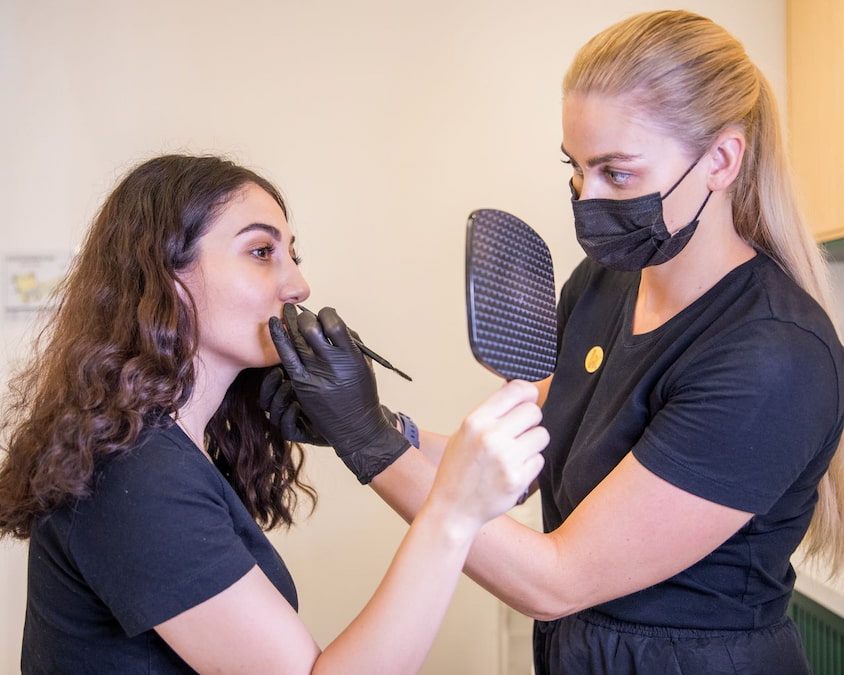
Placement is the decision that matters most. A short consultation lets us map the exact size, position and pigment to your features and skin tone before anything is applied. Book a consultation for your semi-permanent beauty spot in our Dubai or Abu Dhabi studio.