When applied correctly and in the appropriate weight, lash extensions do not damage your natural lashes. They simply shed as part of your natural lash growth cycle. Damage usually occurs when extensions are too heavy, poorly isolated, picked off at home, or removed incorrectly. The treatment itself is not the problem; the technique is.
Short Answer: It Depends Almost Entirely On Your Lash Artist
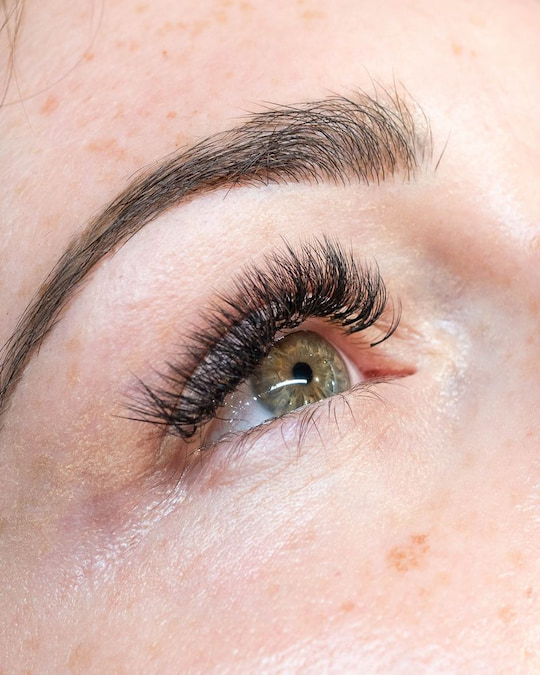
The risk sits with three things: the weight of the extension, how carefully each one is isolated onto a single natural lash, and how the set is eventually removed. Get those right and your natural lashes continue their normal cycle. Get them wrong, and you can see breakage, premature shedding, or worse.
At Brau, we have fixed a lot of sets that started elsewhere. The difference between a healthy result and a damaged one almost always comes down to the artist’s standards, not the fact that you chose extensions.
First, Understand Your Natural Lash Cycle

Your natural lashes grow, rest, and shed in a continuous cycle that lasts roughly 6–8 weeks for each lash. It is completely normal to lose one to five lashes a day. You rarely notice because the fallen lash is short and fine.
When an extension is attached, that same natural lash becomes longer and more visible when it sheds. Many people look in the mirror, see the extension on the pillow or in the sink, and assume the extensions are “pulling out” their lashes. In reality, the natural lash was already ready to fall. The extension simply made the moment obvious. Understanding this cycle is the first step to separating normal shedding from actual damage.
6 Real Ways Lash Extensions Damage Natural Lashes
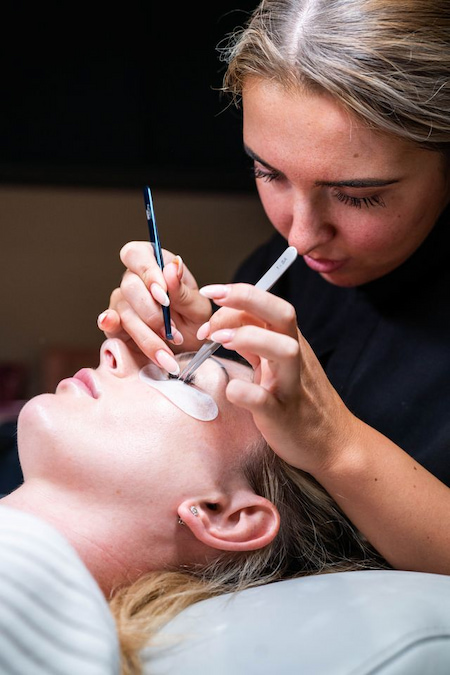
Here is exactly where things go wrong:
- Extensions that are too long or too thick. A natural lash can safely carry roughly its own weight. When the extension is significantly heavier or more than 2–3 mm longer, the natural lash bends, weakens, and eventually snaps.
- Poor isolation: Proper technique places one extension on one natural lash. If two or three natural lashes are glued together, a single shedding lash can rip the others out with it before they are ready.
- Glue on the skin: Cyanoacrylate adhesive that touches the eyelid can block follicles, cause dermatitis, and pull at new growth as it tries to emerge.
- Picking or pulling at home: Tugging an extension off by hand stresses the follicle and often takes the natural lash with it.
- Incorrect removal: Using oil, tweezers, or peeling the set off instead of a proper professional remover damages both the extension bond and the natural lash.
- No recovery time and repeated trauma: Continuous heavy sets with no breaks can lead to traction alopecia, gradual thinning, and in long-term cases, permanent sparse patches along the lash line.
These six issues account for almost every case of real damage we see.
The Weight Rule: Why 0.15 mm At 14 Mm Is A Problem For Some Eyes
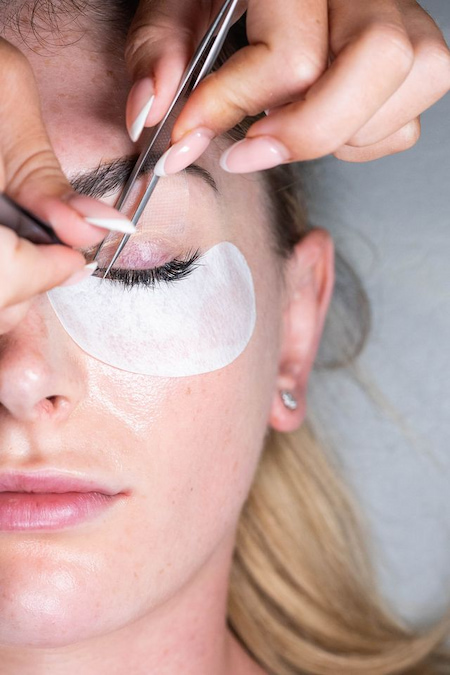
Natural lashes vary in strength. A fine, short lash cannot support the same weight as a thick, long one. That is why volume sets use ultra-fine diameters (0.03–0.07 mm) fanned together, while classic sets use single thicker lashes (usually 0.15–0.20 mm).
A practical rule of thumb: the extension should be no more than 2–3 mm longer than the natural lash it is attached to, and the diameter should match the strength of that natural lash.
Choosing the right style and weight for your natural lashes is more important than choosing the trendiest look.
7 Warning Signs Your Lashes Are Actually Being Damaged
Use this quick mirror check:
- A few extensions shedding each day → normal
- The set looking thinner by week 3 → normal (time for an infill)
- Lashes feeling constantly heavy or tight
- Extensions poking or stinging when you blink
- Lashes stuck together in clumps of two or three
- Natural lashes that look snapped, uneven, or broken
- Visible gaps appearing along the lash line
Any of the last five are red flags. Pain, swelling, redness that spreads, or any change in vision means stop immediately and see an ophthalmologist, not just a lash artist.
Will My Natural Lashes Grow Back?
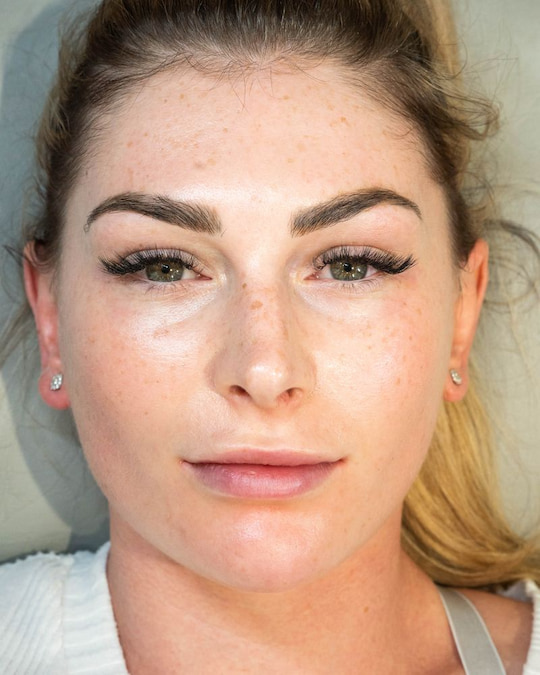
In the large majority of cases, yes. A full natural cycle takes about 3–4 months, so give the lashes a proper season rather than two weeks. Follicles are resilient, but years of repeated heavy trauma can leave lasting sparse areas.
Many people also experience the “my lashes look shorter” illusion after removal. You have simply become used to the length of the extensions. Once the natural cycle completes, the true length returns.
How to Recover Lashes That Are Already Damaged
If you suspect damage, follow this sequence:
- Book a professional removal using a proper gel or cream remover; never try to peel or oil them off yourself.
- Take a full 6–8 week break from any extensions.
- Clean the lash line daily with an oil-free cleanser.
- Use a gentle conditioning serum if recommended.
- Skip mechanical curlers and waterproof mascara while the lashes recover.
Consistency over those weeks makes the biggest difference.
Safer Alternatives While Your Lashes Recover
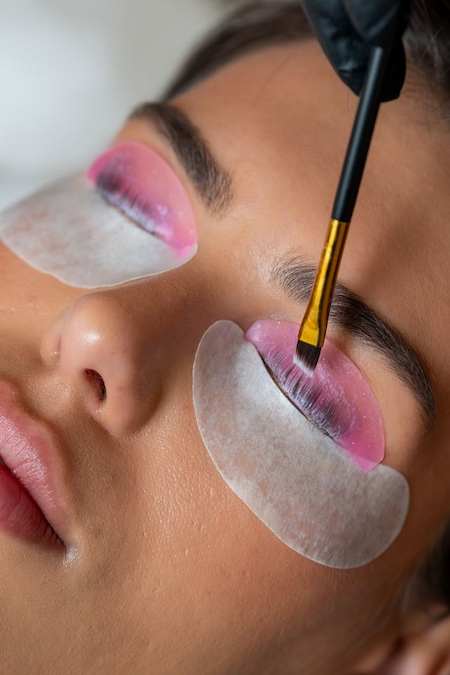
A Korean lash lift is often the kindest option during recovery. It lifts and curls your own lashes from the root without adding any weight, lasts 6–8 weeks, and needs almost no daily maintenance. Adding a tint defines them so you can skip mascara entirely.
Once the recovery period is over, a light classic set (not volume) is the gentlest way to return to extensions if you still want them. The lift-and-tint combination suits anyone who wants open, defined eyes without the commitment or weight of a full set.
The Honest Bottom Line

Lash extensions are safe when the weight matches the natural lash, isolation is precise, and removal is professional. They become risky when any of those three things slip. The variable you control is who you book with.
If you want to talk through your current set, discuss recovery, or explore lighter options, the team at Brau is happy to look at your lashes and give you straightforward advice.