Dermaplaning has picked up its fair share of myths over the years, and it's easy to see why so many people feel unsure about trying it. While some of the concerns are completely unfounded, others have a small grain of truth that's often taken out of context. In this article, we'll break down the seven most common dermaplaning myths. Five are completely false, and two are only partly true, we'll explain exactly why. Here's the clear, honest picture so you can decide without the noise.
What Dermaplaning Actually Does To Your Skin
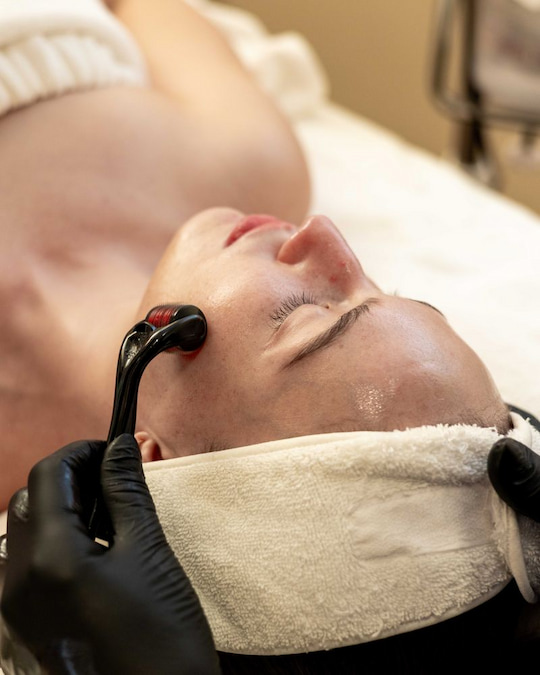
Dermaplaning is a physical exfoliation that uses a sterile surgical scalpel held at a precise angle to remove the top layer of dead skin cells and the fine vellus hair (peach fuzz) on the face. The living layers of skin stay untouched. Results include smoother texture, better product absorption and a brighter surface. For the full benefits breakdown, see our guide to why dermaplaning works so well.
Myth 1: Dermaplaning Makes Hair Grow Back Thicker And Darker
Verdict: False.
This is the myth that puts most people off trying dermaplaning. In reality, the blade only removes hair at the surface of the skin. It never reaches the hair follicle, so it can't change the hair's colour, thickness, or growth cycle.
What does change is the tip of the hair. Naturally, facial hair has a soft, tapered end. After dermaplaning, the hair grows back with a blunt tip, which can make it feel slightly stubbly for the first couple of days. As it continues to grow, that feeling disappears. The hair isn't thicker, darker, or growing any faster than before.
The One Time Facial Hair Can Become Coarser
If you notice your facial hair becoming genuinely thicker or darker over time, dermaplaning is almost certainly not the cause. Hormonal changes, certain medications, and some medical conditions can affect facial hair growth. If that happens, it's worth speaking to your doctor to find the underlying cause rather than assuming the treatment is the reason.
Myth 2: Dermaplaning Causes Breakouts
Verdict: Half true.
Dermaplaning itself does not create new acne. What many people experience is purging: pre-existing congestion that was sitting under the surface comes up within two to five days and clears quickly. A true breakout is different and usually linked to technique or aftercare: an unsterile blade, dirty hands, or a heavy occlusive product applied straight afterwards.
Follow proper aftercare, and the risk of a breakout stays low. Read our guide on dermaplaning do’s and don’ts.
Myth 3: It Isn’t Safe For Darker Or Middle Eastern Skin Tones
Verdict: False, and it’s often the safer option.
Dermaplaning uses no heat and no acid, the two things most likely to trigger post-inflammatory hyperpigmentation in Fitzpatrick skin types IV–VI. Because there is no thermal or chemical injury, the risk of dark marks is significantly lower than with IPL, laser, or aggressive peels. For many clients in the UAE and wider GCC, this makes dermaplaning one of the gentler ways to exfoliate.
Myth 4: It’s Too Aggressive And Thins Your Skin
Verdict: False.
Only the outermost layer of dead cells (the stratum corneum) is removed. Living skin is left completely intact. The real risk is not the treatment itself but doing it too often. A safe in-clinic cadence is every four weeks, which matches the skin’s natural turnover cycle. Over-frequency is what can stress the barrier, not a properly performed session.
Myth 5: The Results Are Permanent (Or That They Last A Week)
Verdict: Both claims are false.
The hair is not permanently removed. It grows back in three to four weeks exactly as it was before. The glow and smoothness typically last around three weeks. Setting realistic expectations prevents the disappointment that sometimes gets labelled “dermaplaning regret.”
Myth 6: A Drugstore Face Razor Does The Same Job
Verdict: Half true.
The basic idea, cutting hair at the surface, is similar. The difference is control, sterility, and technique. A professional uses a single-use sterile blade, stretches the skin correctly, and works at a precise angle. At-home tools are often reused, lack the same control, and carry a higher chance of nicks or irritation. The mechanism is related; the safety margin is not.
Myth 7: Dermaplaning Is Just Fancy Shaving
Verdict: False.
Shaving removes hair. Dermaplaning removes both the hair and the layer of dead cells. That is why makeup sits better, serums absorb more evenly, and the skin looks brighter, changes you do not get from shaving alone.
So Is Dermaplaning Bad For Your Face? The Honest Answer
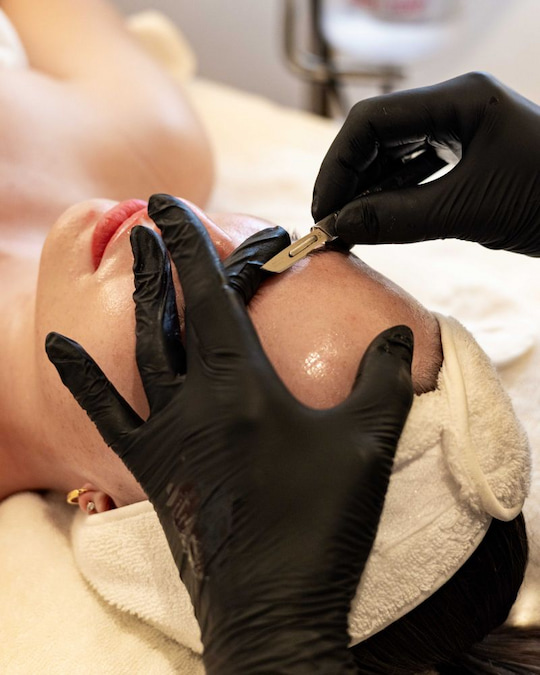
No, dermaplaning is not bad for your face when it is performed correctly on suitable skin. It is a low-risk treatment for most people. It is genuinely the wrong choice for a specific list of conditions.
Real Side Effects Worth Knowing About
- Temporary redness and a feeling of tightness are common and usually settle within a day or two.
- Small whiteheads may appear as part of the skin's natural purging process.
- Minor nicks can occasionally happen, even when the treatment is performed by an experienced professional.
- Infection or scarring is extremely rare and is typically only a risk if an unsterile or reused blade is used, which is why choosing a reputable clinic is so important.
Who Should Skip Dermaplaning Entirely
- Active or cystic acne
- Rosacea flare
- Eczema or psoriasis on the face
- Open cold sore (HSV)
- Sunburn or recent laser
- Raised moles or skin tags in the treatment area
- Isotretinoin (Accutane) within the last six months
If any of these apply, wait until the skin is calm again.
The UAE Factor: Heat, Sun, and Freshly Exfoliated Skin
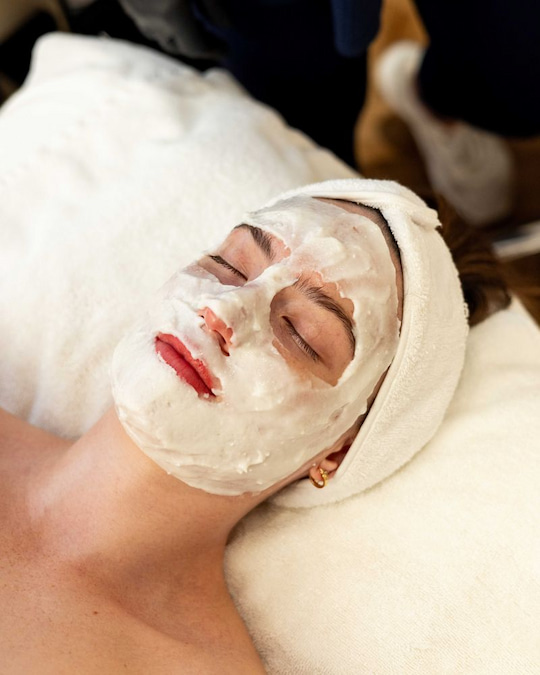
After dermaplaning, the skin has no dead-cell buffer, and the Gulf UV index is extreme for much of the year. For the first 72 hours:
Do
- Apply broad-spectrum SPF 50+ every morning and reapply
- Keep the skin clean and lightly hydrated
- Stay in shade or indoor AC when possible
- Use only gentle, non-irritating products
Don’t
- Book beach or outdoor padel the same day
- Swim in chlorinated pools
- Let sweat sit on the skin for long periods
- Skip sunscreen even for short trips outside
These steps protect against the hyperpigmentation risk that comes with strong sun on freshly exfoliated skin.
Dermaplaning at BRAU, Dubai & Abu Dhabi

At Brau, the dermaplaning treatment is performed by licensed skin specialists. It’s available as a standalone or as an add-on to any facial in both Dubai and Abu Dhabi. If you are unsure whether it suits your skin right now, a short consultation is the easiest way to check.
Dermaplaning Myths: FAQs
Is dermaplaning bad for your face long term?
No. There is no evidence of cumulative damage when sessions are spaced every four weeks. Over-frequency is the only real long-term risk.
How often should you get dermaplaning?
Every four weeks in clinic is the standard recommendation. It lines up with the skin’s natural cell-turnover cycle.
Can you dermaplane at home safely?
Guarded tools make it possible, but you lose the sterile single-use blade, precise angle control, and professional skin assessment. In the UAE, clinic treatments are performed by licensed specialists.
Is dermaplaning safe for sensitive skin?
Usually yes, when the barrier is intact and there is no active flare. During redness, stinging, or a rosacea episode, it is better to wait.