Your eyebrows do something quietly powerful: they frame your entire face. Get the color right, and everything lifts: your eyes look brighter, your features feel more balanced, and you look more awake even on zero-sleep days. Get it wrong, and suddenly the whole face can look dragged down, harsh, or just… off.
We’ve seen it time and again in consultations: someone comes in with beautiful skin and strong features, but their brows are pulling orange, looking ashy-grey, or so dark they create a heavy frame that doesn’t match the rest of them. Most of the time, the issue isn’t depth (how light or dark the brows are); it’s undertone.
Choosing the right brow color isn’t simply about matching your hair. It’s about creating harmony with the subtle temperature underneath your skin. Once you understand skin tone vs undertone, and how they interact with brow pigments, suddenly finding the best brow tint shade (or pencil, powder, or permanent color) becomes much more straightforward.
Let’s walk through it together, step by step.
The Difference Between Skin Tone and Undertone
Skin tone is the surface color you see right away: fair, light, medium, tan, deep, rich. It can shift with seasons, tanning in summer, paling in winter, or with foundation shades. Undertone, on the other hand, is the hidden color beneath the surface. It stays the same your whole life.
The three main families are:
- Warm (golden, peachy, yellow-based)
- Cool (pink, red, blue-based)
- Neutral (balanced, with no strong pull in either direction)
Why does this matter so much for brows?
Because brow pigments (especially in tints and semi-permanent makeup) interact with your undertone during healing and fading.
A shade that looks perfect in the bottle can be too warm (red/orange), too cool (grey/green), or flat if it doesn’t respect the temperature of your skin.
How to Find Your Undertone at Home
You don’t need a professional color analyst to know your undertone. Here are the most reliable tests you can do right now, preferably in natural daylight.
The Jewelry Test
Hold gold jewelry next to your face, then silver.
- If gold makes your skin look brighter, healthier, and more alive, then it’s likely a warm undertone
- If silver lifts you and makes you look clearer, it’s likely a cool undertone
- If both look equally good (or neither stands out), then it’s neutral
The Vein Test
Look at the veins on your inner wrist in daylight.
- Greenish veins → warm undertone
- Blue/purple veins → cool undertone
- Mix of both → neutral (very common)
The White Fabric Test
Drape a pure white cloth or paper near your face, then a cream/ivory one.
- White looks better → cool
- Cream/ivory looks better → warm
- Both fine → neutral
If You’re “Neutral” or Can’t Tell
A lot of people land in “neutral” territory, especially those with olive or Mediterranean/MENA skin tones.
If you’re unsure, start with neutral-leaning eyebrow shade options. You can always nudge warmer or cooler later once you see how your skin reacts to different products.
Brow Color Basics: What Makes Brows Look Natural vs “Obvious”
Natural-looking brows almost always sit just 1–2 shades lighter or darker than your natural brow hairs (unless you’re intentionally going for a high-contrast look).
Jet black brows on anyone other than very deep skin tones with jet black hair tend to look harsh and “drawn-on.”
The “expensive brow” look everyone loves has these qualities:
- Soft fade at the front (no solid block)
- Gradual build-up in density through the middle
- Balanced, tapered tail
- Color that looks like it belongs to your skin and hair family
Warm vs Cool Brow Tones
- Warm brow tones (honey, caramel, chestnut, golden brown) bring warmth and softness, especially flattering on golden or peachy skin.
- Cool brow tones (taupe, ash brown, graphite, and cool dark brown) add definition without heaviness; they are particularly perfect for those with pink or rosy undertones.
- Neutral brow tones are the safest middle ground; balanced browns with no strong red/orange or grey/green cast.
Why Brows Turn Red/Orange or Grey/Green
- If a pigment that is too warm (containing red or orange undertones) is used on cool/neutral-cool skin tones, it often pulls noticeably red or orange during the healing process.
- If a pigment that is too ashy/cool (containing grey or blue undertones) is used on warm skin tones, it tends to develop a grey, ashy, or even greenish cast as it heals.
- Leaving the tint or pigment on for too long can cause over-processing, which often results in an undesired color shift or intensified tone.
- Pigment oxidation, especially common in semi-permanent makeup procedures, can cause the color to change significantly after application (often becoming darker, cooler, or more reddish/salmon than the original implanted shade).
Shade-Matching Framework
Here’s a practical two-step method I use with clients every day.
Step 1 – Choose Depth by Skin Tone + Natural Brow Hair
- Fair/light skin: usually light to medium brows (too dark = harsh frame)
- Medium/olive skin: medium to medium-dark (most forgiving range)
- Deep/rich skin: medium-dark to dark (but rarely pure black)
Extra tips:
- If your brows are naturally sparse, going 1 shade lighter can actually look fuller than a very dark shade.
- If you dye your hair, match your brows closer to your natural root color than the dyed length for the most balanced look.
Step 2 – Choose Tone by Undertone
- Cool undertone: lean toward taupe, ash brown, cool medium brown, graphite
- Warm undertone: honey blonde tones, caramel, warm medium brown, chestnut, rich chocolate
- Neutral undertone: true neutral browns; you can micro-adjust warmer or cooler depending on hair color and personal preference
Quick “Cheat Sheet”
- Cool + fair skin → taupe, ash blonde, cool light brown
- Cool + medium skin → ash brown, cool medium brown
- Cool + deep skin → cool dark brown, graphite (avoid warm espresso)
- Warm + fair skin → honey blonde, warm light brown
- Warm + medium skin → caramel, warm medium brown
- Warm + deep skin → warm dark brown, rich chocolate
- Neutral (any depth) → neutral brown in your appropriate depth range
Special Cases That Often Go Wrong (and How to Fix Them)
Olive Undertones (Common in MENA / Mediterranean Backgrounds)
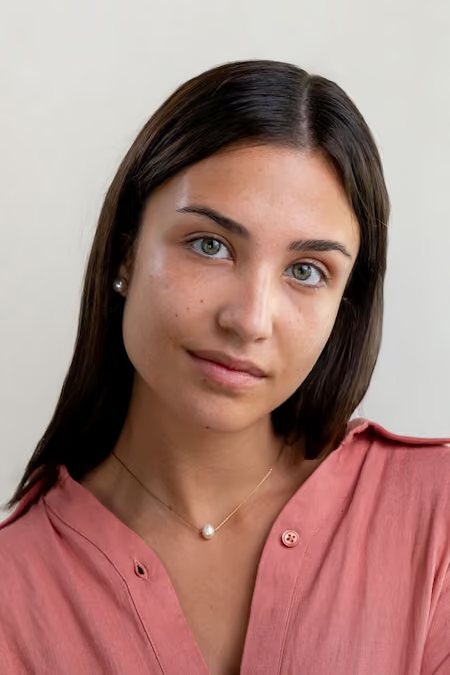
Olive skin can read neutral-cool or neutral-warm depending on lighting, season, or even how tanned you are right now.
Best approach: Always start with neutral browns; they’re the safest and most forgiving.
- If brows pull orange or warm after tinting/healing → cool them down slightly next time (add a drop of ash).
- If they heal flat, grey, or lifeless → nudge a bit warmer (soft taupe or light caramel blend). Test and tweak; olive skin loves this trial-and-adjust method!
Redheads & Warm Brunettes
Avoid overly ashy shades at all costs; they usually turn muddy, dull, or even a bit green on warm undertones.
Best approach: Go for soft auburn, chestnut, or warm caramel tones. These keep the brows looking vibrant, flattering, and full of life.
Blondes & Light Features
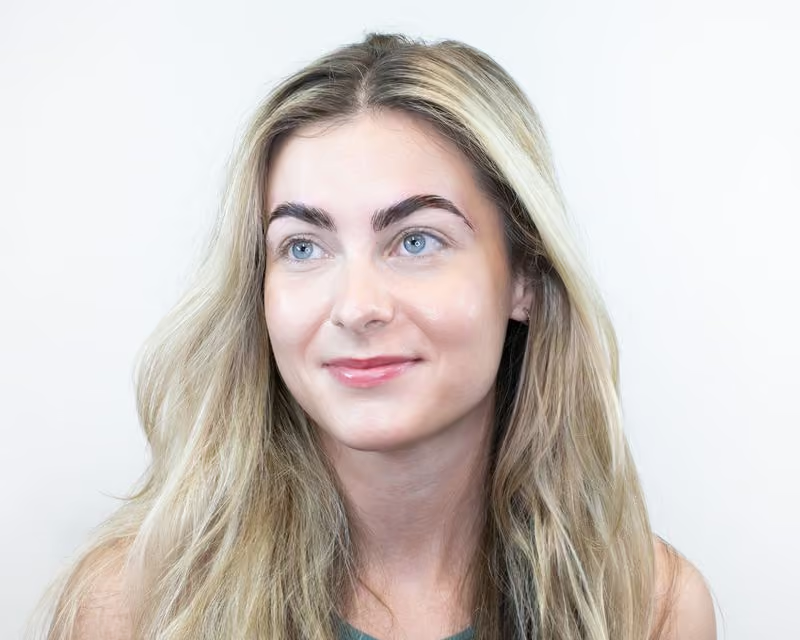
Biggest mistake: going too dark; it creates a heavy, overpowering frame around delicate features.
Best approach: Stick to 1 shade deeper than your natural hair color max, and lean neutral-to-cool. Light ash brown or taupe keeps things soft and natural.
Black Hair Doesn’t Mean Black Brows
Pure jet black brows often heal flat, harsh, and aging; they lose dimension.
Best approach: Opt for soft espresso, graphite, or cool dark brown. You still get great definition, but it stays natural and fresh-looking.
Grey Hair
Over-ashy brows can make everything look flat and lifeless, while too warm might clash with the silver tones.
Best approach: Match the depth to your skin tone, use soft neutral browns, keep the front lighter/softer for a natural gradient, and skip anything too heavy or icy-cool.
Brow Tint vs Brow Makeup vs SPMU: Does Undertone Work Differently?
Brow Tint
The brow tint undertone affects both the hair color and the subtle stain left on skin.
Processing time matters hugely, too long and even the right shade can go too dark or pull warmer.
Brow Pencil/Powder/Gel (Daily Makeup)
Much more forgiving. You can test different eyebrow shade undertones in daylight, layer, and adjust them day by day.
SPMU
Undertone is critical here because pigments heal and fade over months/years.
The artist’s pigment selection, your skin’s reaction, and proper aftercare all play a role.
This is why a thorough brow consultation (with mapping and shade testing) is non-negotiable before any SPMU service.
Final Thoughts
Choosing the right brow color comes down to two things:
- Depth: based on your skin tone and natural brow hair
- Tone: based on your undertone (warm, cool, or neutral)
Small tweaks in undertone make the biggest difference in whether your brows look harmonious or like they’re “fighting” your face.
If you’re still unsure or you’re thinking about a tint, shaping, or semi-permanent solution, come see us. During a brow consultation at Brau (Dubai or Abu Dhabi), we take our time to analyze your skin undertone, natural brow hairs, facial features, and preferences.
We’ll custom-blend or select the shade that looks like it’s always belonged there. No pressure, no rush, just honest advice and a plan that actually works for you.
Book your free brow consultation today or explore brow tint services.