Getting a beauty spot itself is quick. Deciding where it should go is the part worth taking your time over. The placement is something you'll notice every time you look in the mirror, so it's worth choosing carefully. A well-chosen beauty spot (or beauty mark) draws the eye exactly where you want it and can subtly change the way your features are perceived. This guide walks you through the most flattering placements for the six main face shapes and explains the reasoning behind each, so you can walk into a consultation with a clear preference rather than leaving the decision entirely to chance.
Why Placement Is the Whole Decision
A beauty spot naturally draws attention. Your eye is likely to notice it first, which means the area around it becomes the focal point of the face. The same principle is used in makeup, where contour, blush, and highlight are placed to guide attention.
These recommendations come from makeup artistry and facial balance rather than strict rules. There isn't one perfect place for everyone. The general idea is simple: place the beauty spot where you want the eye to go, rather than drawing attention to an area you'd rather soften. For example, a mark placed too low on a round face can make it appear wider, while one sitting on the widest part of a diamond-shaped face can make the cheekbones stand out even more.
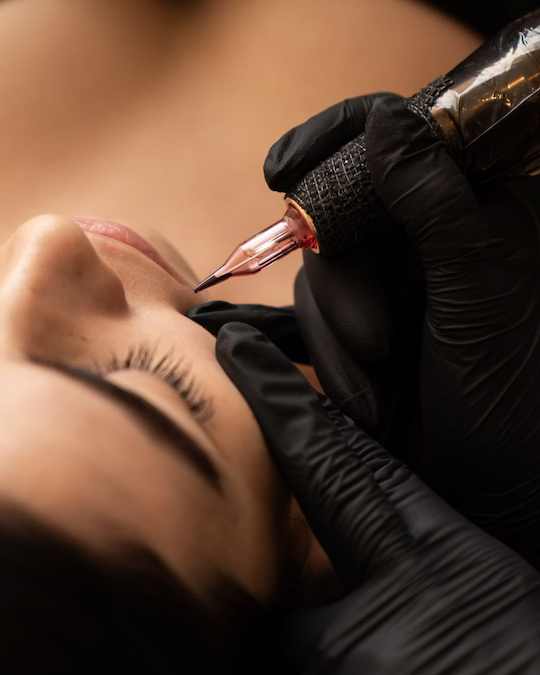
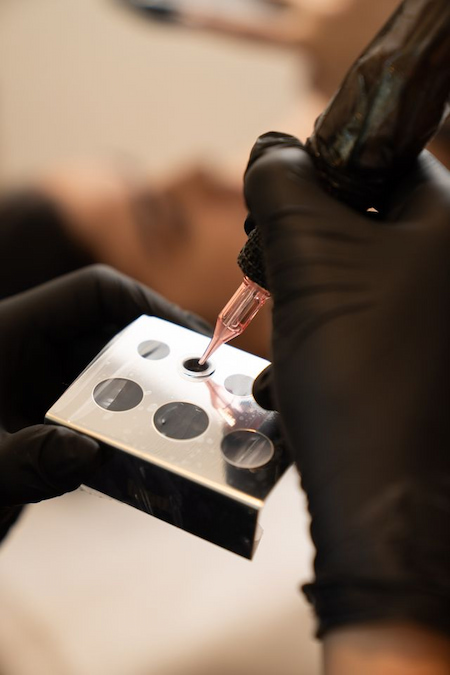
A semi-permanent beauty spot is created through micropigmentation; a fine needle deposits cosmetic pigment into the upper layer of the skin so the result looks natural and fades gradually over time. Because the pigment sits relatively shallow, placement becomes even more important. You'll see it every day for a year or longer, and changing your mind later isn't always straightforward.
Placement by Face Shape
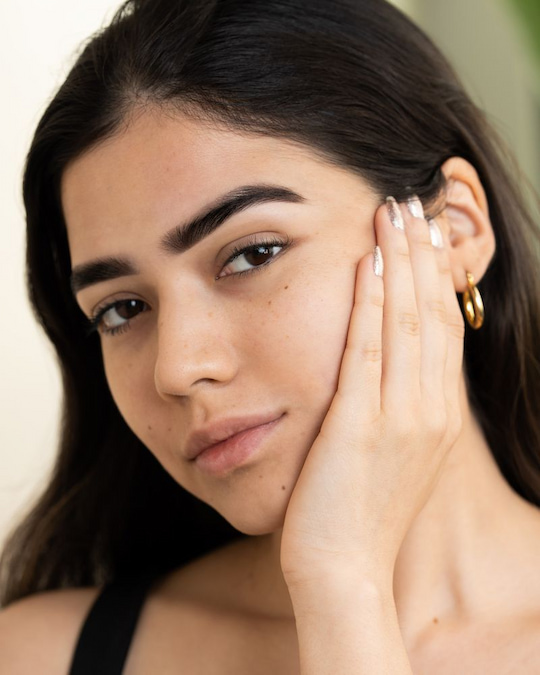
You are not correcting your face. You are choosing where the eye rests. The goal is balance and intention, not perfection.
Oval
Length is slightly greater than width, and no single feature dominates. Almost any placement works, so choose by intention rather than correction. The classic position above the upper lip draws soft attention to the mouth and smile. A mark on the outer cheekbone creates a subtle lift and frames the eyes. Because the proportions are already balanced, your decision can be guided by personal preference, the side you photograph from, or the feature you most enjoy emphasising. An oval face gives you the most flexibility, so this is really a matter of personal style.
Round
Width is roughly equal to length, with the cheekbones the widest point and a soft jaw. Place the mark high and outer, on the upper cheekbone travelling toward the temple, or just above and out from the corner of the mouth. Placing the mark slightly higher helps draw the eye upward, creating the same lifting effect that contour often gives round faces. Avoid placing the mark on the low centre of the cheek (the "apple") or directly below the pupil, as this can draw more attention to the widest part of the face. Keeping it slightly higher and farther out usually helps the face appear longer and more defined.
Square
A strong angular jaw, broad forehead, and similar width from top to bottom. Place the mark mid-height and slightly inward, beside the upper lip, or just under the outer corner of the eye. Drawing attention to the softer central area of the face naturally takes emphasis away from the jawline. Avoid placing a beauty spot along the jaw or at the mandibular angle, where it can make the strong bone structure feel even more prominent. A mark near the mouth or under the outer eye keeps the focus on the softer features instead.
Heart
If you have a heart-shaped face, the forehead naturally draws attention first. A lower beauty spot can help balance that without looking obvious. Good placement options include the lower cheek, near the jaw, or beside the mouth. Avoid the temple or the upper cheek close to the hairline, as these areas already attract attention. Placing the beauty spot lower can help balance the face.
Diamond
The cheekbones are the widest point, while the forehead and jaw are narrower. Place the mark away from the cheekbone itself, at the temple, beside the mouth, or on the chin. A beauty spot placed directly on the widest part of the cheekbone can make that area feel even more prominent. Moving it slightly away softens the overall look without fighting your natural features. Many people with diamond-shaped faces find that a mark near the mouth or chin creates a more harmonious balance.
Oblong / Rectangle
Noticeably longer than wide, with similar width from forehead to jaw. Place the mark low and outer, on the outer lower cheek, or out to the side of the mouth. This creates visual width and helps break up the face's longer proportions. Avoid placing the mark along the centre line of the face, such as the philtrum, the middle of the chin, or the bridge of the nose, as this can make the face appear even longer. A slightly off-centre placement usually feels softer and more balanced.
One Mark, Off-Centre – and Why
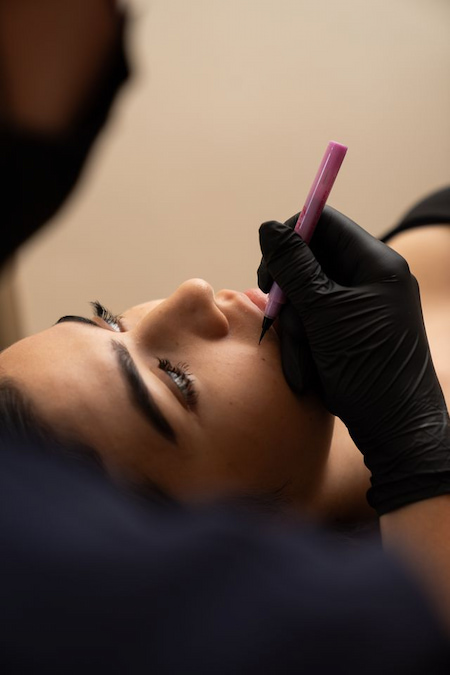
The single most repeatable rule is this: one mark, placed asymmetrically, reads as natural. Two matching marks tend to look deliberate or freckle-like. A perfectly centred mark can feel staged.
Choose the side you photograph from most often, the side your hair parts away from, or simply the side that feels more natural to you. One thing many people don't realise is that a beauty spot can look surprisingly different depending on your hairstyle or your favourite angle in photos.
Marilyn Monroe's famous mark was a genuine mole on her left cheek that she darkened with pencil for early shoots. Cindy Crawford's sits above the left side of her upper lip. Neither is centred, and that asymmetry is part of why both look so natural and memorable.
Living with a temporary version drawn in pencil or henna for a week or two is still one of the best ways to see whether the position feels right before committing to semi-
What Placement Changes About Longevity
Not every position fades at the same rate, and this is worth factoring into your decision.
- Upper lip / vermilion border: Usually fades the quickest because the area moves constantly and comes into contact with food, drinks, cleansing, and lip products every day.
- Under the eye: Also fades relatively quickly because the skin is thin, highly mobile, and often rubbed.
- Nasolabial fold: Tends to soften sooner because the area creases every time you smile or talk.
- Outer cheekbone: Usually holds up longer since the skin there is flatter and moves less.
- Temple: Doesn’t move much, but it gets a lot of sun, so daily SPF really matters.
- Chin and jaw: Generally offer moderate longevity.
Most semi-permanent beauty spots last around 1–2 years, although many clients choose an annual colour boost to keep the pigment looking fresh. High-movement areas and regular sun exposure can both shorten that lifespan, so wearing SPF every day helps preserve the result wherever your beauty spot is placed.
Placements to Think Twice About
- Directly on the vermilion border: the area moves constantly, and the mark can blur or lose sharpness.
- Inside the nasolabial fold: a crease reads as a line rather than a clean point and can look like a shadow.
- The very centre of the chin or philtrum on a long face: it lengthens the midline and draws the eye straight down.
- Symmetrical pairs: they read as freckles or as a conscious design decision rather than a natural mark.
- Anywhere with active breakouts, eczema, or recent filler or laser work: the skin needs to be calm and stable.
- Too large: a natural-looking mark is usually 2–3 mm. It is far easier to add a little more depth or size at the touch-up than to reduce something that feels oversized.
Keeping the mark small and slightly off-centre usually creates the most natural-looking result.
Book a Consultation
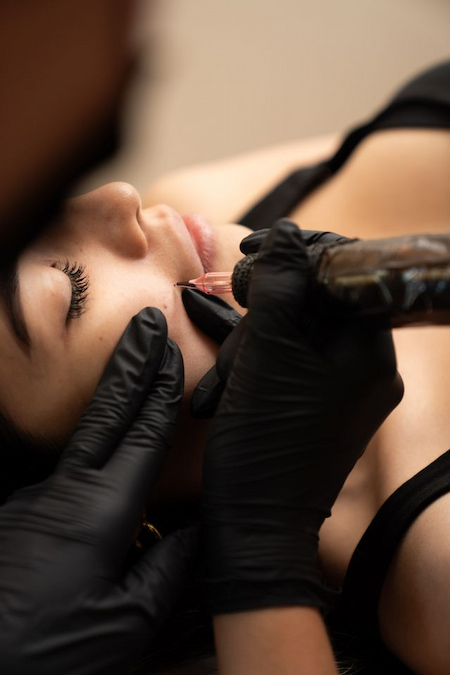
Placement is a decision best made on a face in a mirror, not on a screen. A short consultation lets us map the exact position, size and pigment to your features and face shape before anything is applied. You can test the placement, discuss longevity for that specific area, and leave with a clear plan. Studios are available in Dubai and Abu Dhabi. Book you semi-permanent beauty mark consultation with us.